 how-to
How to Prepare for Your First Visit to a New Dentist
Table of Contents
- What to Say When Making a Dentist Appointment
- What to Bring to a Dentist Appointment: A Checklist
- Completing New Patient Forms and Reviewing Your Medical History
- What to Expect at Your First Dentist Appointment
- Managing Dental Anxiety Before and During Your Visit
- Questions to Ask Your New Dentist
- Returning to the Dentist After Years Away: What Changes
- Booking Your First Visit With EPO Dental Specialists
- Frequently Asked Questions
What to Say When Making a Dentist Appointment
Last Updated: November 5, 2026
Knowing how to prepare for your first visit to a new dentist starts before you walk through the door. The phone call you make to book is your first chance to share what you need and set expectations. Tell the front desk that you are a new patient, and ask whether the office is accepting new patients on the schedule you need.
When you call, keep the conversation simple and useful:
- Say you are a new patient. This tells the staff to set aside time for paperwork and a longer first visit.
- Describe your main concern. Say something like "a sensitive tooth on the lower left" or "gums that bleed when I brush."
- Ask about the visit length. Many offices book longer first appointments for new patients.
- Ask what to bring. Confirm the forms, insurance details and any records the office needs.
Write down the date, time and name of the person you spoke with. That small step helps if the schedule changes.
What to Bring to a Dentist Appointment: A Checklist
Bringing the right items saves time at check-in and helps the dentist understand your history, so use this checklist when you learn how to prepare for your first visit to a new dentist the night before you go:

- Photo ID, such as a driver's license
- Dental insurance card, if you have one
- Health insurance card, in case the dentist bills medical coverage
- A list of current medications, including doses
A common mistake is forgetting the medication list. Many patients remember their medicines only after they sit in the chair. Write the list on paper or save it on your phone before you leave home.
Completing New Patient Forms and Reviewing Your Medical History
Most dental offices ask new patients to fill out forms before the exam. These forms usually cover your contact details, insurance, medical conditions and dental history.
Expect questions about:
- Medical conditions, such as heart problems, diabetes or high blood pressure
- Medications, including over-the-counter drugs and supplements
- Allergies, especially to antibiotics, local anesthetic or latex
- Pregnancy status, if applicable
Answer honestly, even if the information feels personal or embarrassing. The dental team uses these details to plan safe care.
Some practices offer their own new patient forms online. You can find that information on the practice website, as on the Information for New Dental Patients page, so you can complete the paperwork before you arrive.
What to Expect at Your First Dentist Appointment
The first visit usually follows a set pattern.
Here is what often happens:
- Check-in and paperwork. Plan to arrive 10 to 15 minutes early so you have time to finish forms. If you completed the forms online, bring your insurance card and photo ID to the desk.
- Health history review. A staff member or the dentist will go over your answers with you. This is the moment to mention any medication changes, recent surgeries, or allergies that were not on the form.
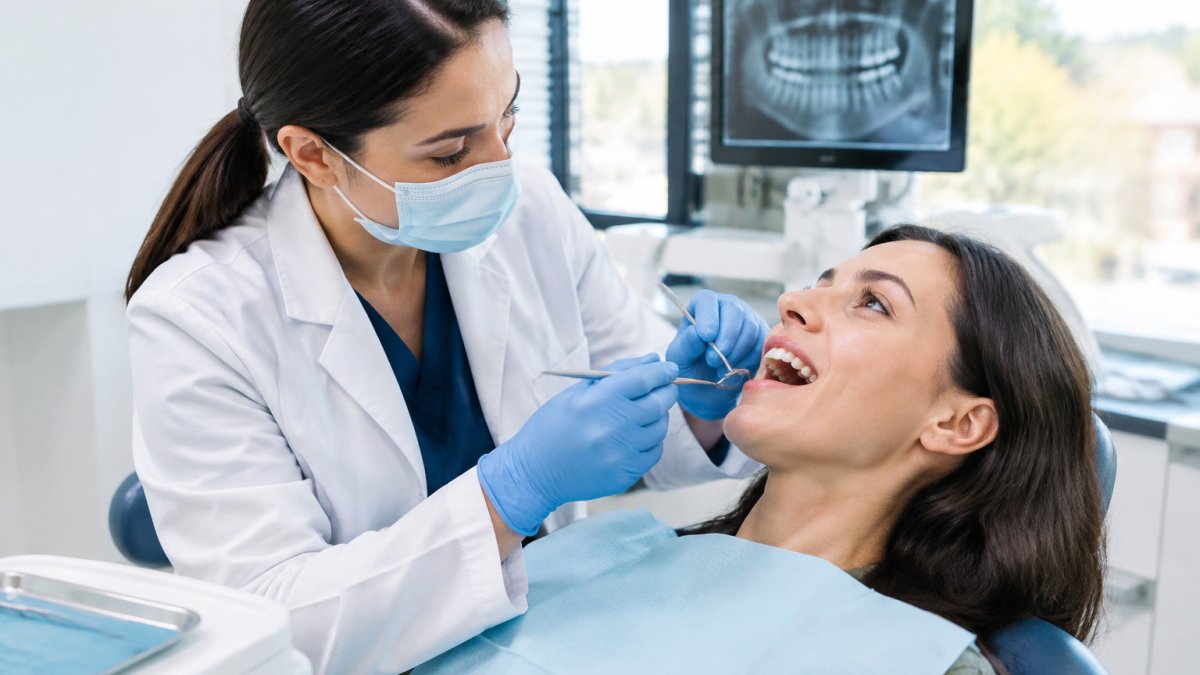
- Oral examination. The dentist checks your teeth, gums, bite, and jaw. They may also screen for oral cancer by feeling the neck, jaw, and inside of the mouth.
- X-rays. Many offices take X-rays at the first visit to see problems that are not visible during an exam, such as decay between teeth or bone loss around the roots. A full set of bitewing and periapical X-rays is common for a new patient; a panoramic X-ray may be taken if the dentist needs a view of the whole jaw.
- Cleaning. A dental hygienist often removes plaque and tartar, then polishes your teeth. If your gums are inflamed, the cleaning may be limited to one area and the rest scheduled for a follow-up.
- Discussion of findings. The dentist explains what they found and whether you need follow-up care.
Not every office does every step at the first visit.
What happens after the exam
The appointment does not end when you leave the chair.
- You will likely receive a treatment plan. This is a written list of recommended care, usually ordered by urgency: what needs to be done now, what can wait, and what is optional. Ask for a copy before you leave, whether printed or through the patient portal.
- Ask what is urgent versus what can wait. A dentist may recommend several fillings, a crown, and a deep cleaning. Ask which item, if any, needs to be addressed first and what happens if you delay the rest.
- Ask for the cost estimate in writing. The front desk can usually produce an estimate that shows the practice's fee, the expected insurance payment, and your estimated out-of-pocket amount. Ask whether the estimate assumes your deductible has been met.
- Confirm what your insurance covers before scheduling treatment. The office may submit a pre-treatment estimate to your dental plan, which can take a few days to a few weeks. Ask whether a pre-authorization is needed for any recommended procedure.
- Schedule the next appointment before you leave. If treatment is recommended, book it at the front desk while you are still there. Offices often have more availability for follow-up visits booked in person than for new-patient slots.
Watch out: Do not assume a treatment plan is final or that you must accept every item on the spot.
A good first visit ends with you knowing three things: what the dentist found, what they recommend, and what it will cost you. If you leave without those answers, call the office and ask.
The first visit usually follows a set pattern, from check-in through the exam, X-rays and cleaning.
| Step | What happens | Timing |
|---|---|---|
| Check-in and paperwork | Finish forms and show insurance card and photo ID | Arrive 10 to 15 minutes early |
| Health history review | Go over form answers and mention any changes | At check-in |
| Oral examination | Dentist checks teeth, gums, bite and jaw | During visit |
| X-rays | Bitewing and periapical set, panoramic if needed | Often at first visit |
| Cleaning | Hygienist removes plaque and tartar, then polishes | Often at first visit |
| Discussion of findings | Dentist explains results and follow-up care | End of visit |
Managing Dental Anxiety Before and During Your Visit
Dental anxiety is one of the most common reasons people delay care, and it is the single most useful thing to address before a first visit.
Before the appointment
- Name the fear specifically. "I am afraid of the drill" is easier for the office to accommodate than "I am nervous." Staff can plan around a specific trigger; they cannot plan around a vague one.
- Tell the scheduler when you book. Say plainly: "I have dental anxiety and would like a longer first appointment and a team member who is good with nervous patients." Most offices will note this in your chart and pair you with a hygienist or dentist who works well with anxious patients.
- Ask for a morning slot. Anxiety tends to build through the day, and an early appointment leaves less time to ruminate. It also means less chance the office is running behind from earlier patients.
- Visit the office beforehand if it helps. Many practices will let you stop in to see the room, sit in the chair, and meet the staff without any treatment. Ask when you call.
- Write down your three biggest worries and bring the list. Handing it to the dentist at check-in is easier than saying it out loud in the chair.
During the appointment
- Agree on a stop signal before anything starts. Raise your left hand means "stop now." Confirm the dentist and hygienist both know the signal and will honor it immediately.
- Ask for a running commentary. Request that the dentist narrate each step before doing it: "I am going to count your teeth now," "You will feel a little pressure." Predictability reduces the startle response.
- Use the hand signal early. Do not wait until you are overwhelmed. Raising your hand for a 10-second break is far easier than trying to push through and then avoiding the next appointment.
- Bring headphones and a playlist you have tested at home. Noise-canceling headphones plus music you know well gives your brain something predictable to track.
- Ask about numbing gel before the anesthetic injection. A topical numbing agent applied first makes the injection feel like pressure rather than a pinch.
Watch out: Do not agree to a full exam, X-rays, and cleaning in one sitting if you know a long appointment will overwhelm you.
A script you can use at check-in
"I have dental anxiety.
Anxiety management is not a special request. It is a normal part of care, and a well-run office will treat it that way.
Questions to Ask Your New Dentist
Write your questions down before the visit. A new dentist should welcome them.
Consider asking:
- What do you see in my teeth and gums, and how serious is it?
- Which treatments are urgent, and which can wait?
- What will each treatment cost, and what might my insurance cover?
- How many visits will I need to finish my care?
- How often should I come in for cleanings and checkups?
Asking these questions helps you understand your care and make informed choices. If the answers are unclear, ask for a simpler explanation.
Returning to the Dentist After Years Away: What Changes
If you have not seen a dentist in several years, your first visit may take longer. The team may need more time for X-rays, a deeper cleaning or a full exam. Gum disease and tooth decay often develop without obvious pain, so a long gap can mean more work is needed.
Expect these differences:
- More paperwork. The office needs your updated medical history and medication list.
- Longer exam time. The dentist may check for problems that have built up over time.
- Possible deep cleaning. If your gums show signs of disease, you may need extra cleanings.
- Updated X-rays. Old images may not show your current condition.
Be honest about how long it has been since your last visit. The dentist will not judge you, and an accurate history helps them plan safe, effective care.
Booking Your First Visit With EPO Dental Specialists
EPO Dental Specialists provides multi-specialty dental care in Richardson, TX, with specialists in endodontics, periodontics and orthodontics. If you are looking for a new dentist or need a referral for specialty care, our team can help you plan your first visit.
Before you come in, you can review what to expect on our Richardson's Trusted Dental Experts page and see the office environment on the Tour our Richardson Dental Office page.
Frequently Asked Questions
What should I expect on my first visit to a new dentist?
Expect check-in paperwork, a review of your medical and dental history, a visual and clinical examination, and possibly X-rays and a professional cleaning. The dentist will talk through what they found and may suggest a follow-up plan. Visits for new patients often take longer than routine checkups because the team is building your records from scratch. Arriving ten to fifteen minutes early gives you time to finish forms without rushing. Ask questions at any point if something is unclear.
What should I bring to my first dental appointment?
Bring a photo ID, your dental insurance card, and your health insurance card if it applies. List your current medications, dosages, and any allergies, including reactions to latex, anesthetics, or antibiotics. Bring any recent dental X-rays or records if you have them, and the name of your previous dentist. Write down your main concerns, such as tooth sensitivity or bleeding gums, so you do not forget them in the chair. Having these items ready speeds up check-in.
What should I say when making a dentist appointment?
Tell the scheduler that you are a new patient and state the reason for your visit, whether that is a routine checkup, a specific tooth problem, or pain. Mention if you are anxious, need a longer appointment, or prefer a particular time of day. Ask what forms you can complete ahead of time, whether the office accepts your insurance, and what the cancellation policy is. Confirm the address, parking details, and the arrival time they recommend.
How long does a first dentist appointment usually take?
A first visit usually takes longer than a routine checkup, and the length depends on whether X-rays, a cleaning, or a full examination is included. Some offices schedule a shorter intake visit and a separate appointment for treatment. When you book, ask how much time the office has reserved for new patients so you can plan your day. If you have a specific concern, mention it so the office can allow enough time.
Ready to book your first visit? Request an appointment with EPO Dental Specialists and let our team help you prepare with confidence.