
 how-to
How to Prepare for an Endodontist Consultation for a Cracked Tooth
Last Updated: November 8, 2026
Quick Summary
A cracked tooth consultation with an endodontist is the fastest way to find out whether the tooth can be saved, and how. Before the appointment, log your symptoms, chew on the opposite side, and ask your general dentist to forward recent X-rays and referral notes. The exam itself combines history, bite testing, transillumination, probing, and sometimes CBCT imaging.
- A 2026 umbrella review found 84%-96% survival when endodontic therapy is followed by full cuspal coverage.
- Pain on release of biting pressure is a classic sign that a cusp is flexing.
- A standard dental X-ray often shows nothing because the fracture line is too narrow or parallel to the film.
- A 2026 study of 263 cracked posterior teeth reported an 82.9% overall success rate after root canal treatment.
- A tooth with a complete split or vertical root fracture typically cannot be saved.
Table of Contents
- Why a Cracked Tooth Needs an Endodontist Consultation
- Cracked Tooth Symptoms That Point to a Fracture
- What to Do Before Your Appointment
- Endodontist Cracked Tooth Diagnosis: How the Exam Works
- Can a Cracked Tooth Be Saved? What the Evidence Shows
- Root Canal for Cracked Tooth: What Treatment Involves
- Request an Appointment at EPO Dental Specialists
- Frequently Asked Questions
Why a Cracked Tooth Needs an Endodontist Consultation
A cracked tooth consultation with an endodontist is the fastest way to find out whether the tooth can be saved, and how. That matters because the numbers are genuinely encouraging: a 2026 umbrella review of cracked tooth treatment found 84%-96% survival and 82%-84% success when endodontic therapy is followed by full cuspal coverage, according to the umbrella review on cracked tooth treatment. At EPO Dental Specialists, we see the difference that early specialist evaluation makes, and we built this guide around the practical steps: what to do before the appointment, what the exam involves, and how treatment decisions get made.
A cracked tooth is a fracture line in the tooth structure that can run through enamel, dentin, or deeper toward the pulp. Cracks behave differently from a clean break, and that is exactly why they need a specialist's eye.
Your general dentist can spot a problem. An endodontist spends their working day on the pulp and root, using magnification and imaging that reveal what a routine exam may miss. The sooner a crack is evaluated, the more options remain open.
Cracked Tooth Symptoms That Point to a Fracture
Cracked tooth symptoms are often maddening in their inconsistency. Pain appears when you bite down, then vanishes for days. That on-and-off pattern is one of the most reliable clues in cracked tooth syndrome, a collection of signs tied to incomplete fractures that are hard to see.
Watch for these signals:
- Sharp pain when biting or chewing, especially on release of pressure
- Sensitivity to hot or cold that lingers longer than usual
- Intermittent pain that comes and goes without a clear trigger
- Pain localized to one tooth, often a back molar
- Swelling or tenderness in the gum near the suspect tooth
A 2021 review of cracked tooth syndrome literature describes how these symptoms and diagnostic findings overlap, which is why a clinical exam matters more than any single complaint (review of cracked tooth syndrome). Pain on release, in particular, is a classic sign that a cusp is flexing.
What to Do Before Your Appointment
A cracked tooth can change hour to hour, so the days before your cracked tooth consultation are best spent protecting the tooth and gathering information that will make the visit more productive. The goal is not to diagnose yourself; it is to arrive with a clear story and a tooth that has not been pushed further into fracture.
Start with a simple symptom log. Note the date and time pain occurs, whether it strikes on biting down or on release, whether hot or cold triggers it, and how long the sensation lasts. A common pattern is pain that appears on release of pressure and fades within seconds, but any pattern is useful. Bring the log to the appointment; a written record often reveals triggers you would not recall in the chair.
Protect the tooth in the meantime:
- Chew on the opposite side and avoid hard foods such as ice, nuts, and popcorn kernels, plus sticky foods that can pull on a cusp.
- Brush gently around the tooth with a soft-bristled brush and keep the area clean; do not floss forcefully if it provokes pain.
- If the edge feels sharp, dental wax from a pharmacy can cover it temporarily to protect your tongue and cheek.
- If you take pain medication, follow the label and check with a pharmacist if you take other medications or have health conditions.
Watch out: do not ignore swelling, fever, a bad taste, or pain that keeps you awake. Those can signal infection spreading beyond the tooth and warrant urgent care rather than waiting for a routine consultation.
Paperwork and logistics matter more than patients expect. Ask your general dentist to forward recent X-rays, referral notes, and any treatment history so the endodontist is not starting from zero. Confirm insurance and referral requirements directly with the practice and your plan. Write down your questions about visit length, same-day imaging, and costs before you arrive. If you expect sedation or a lengthy visit, arrange a ride home. Our guide on how to handle a cracked tooth until your appointment walks through these steps in more detail, and our step-by-step guide to preparing for a root canal covers what to expect if treatment is recommended.
Endodontist Cracked Tooth Diagnosis: How the Exam Works
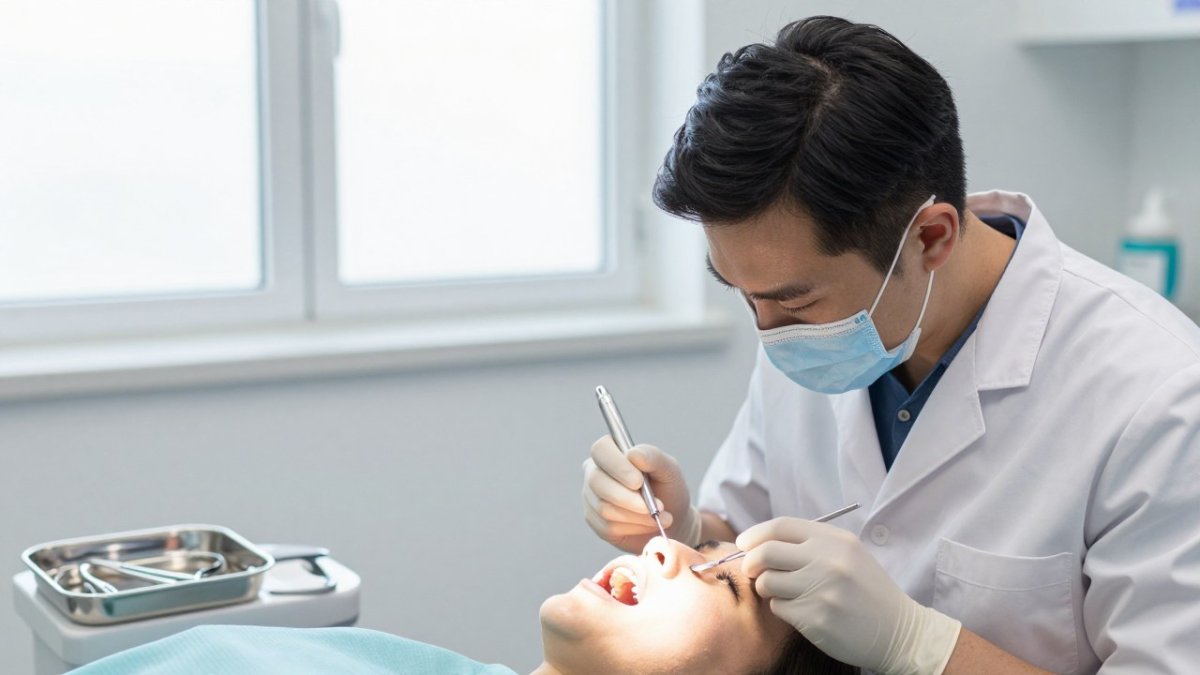
Endodontist cracked tooth diagnosis is less a single test than a sequence of small clues assembled into a picture. Cracks are notoriously hard to see, and a standard dental X-ray often shows nothing at all because the fracture line runs parallel to the film or is too narrow to register. That is why the consultation relies on history, hands-on testing, magnification, and sometimes advanced imaging, and why the endodontist may tell you the diagnosis is probable rather than certain.

The visit typically follows a stepwise pattern:
- History. The endodontist asks when pain started, whether it occurs on biting or release, whether hot or cold lingers, and whether you grind or clench. This conversation often narrows the suspect tooth before any instrument is used.
- Visual and tactile exam. With magnification, the endodontist looks for a fracture line, stains, or a fractured cusp. An explorer may be run along the surface to feel for a catch.
- Bite test. You bite on a small instrument, such as a Tooth Slooth or a cotton roll, and report pain on release. Pain on release is a classic sign that a cusp is flexing and the crack is opening under load.
- Transillumination. A bright fiber-optic light is placed against the tooth; a crack interrupts the glow and appears as a dark line. This works best on front teeth and is less reliable on back molars.
- Periodontal probing. The endodontist measures gum pocket depths around the tooth. A narrow, isolated deep pocket can suggest a crack extending toward the root.
- Radiographs. Periapical X-rays show the root and surrounding bone but often miss the crack itself. They are more useful for ruling out other causes and for spotting bone loss that hints at a vertical root fracture.
- Cone beam computed tomography (CBCT). When the picture is unclear, a three-dimensional scan can map crack depth and location and help determine whether the pulp or root is involved. Not every practice uses CBCT for every case, and it adds cost.
The honest caveat is that no test is perfect. A crack may be visible only after the tooth is opened, and some fractures are confirmed during treatment rather than before it. Combining several tests can raise confidence, but uncertainty is normal and is part of why the consultation matters. If the diagnosis remains unclear, the endodontist may recommend a period of monitoring, a temporary restoration, or referral for a surgical consult. Our guide to booking an endodontic consultation explains how to prepare for these steps.
Can a Cracked Tooth Be Saved? What the Evidence Shows
Can a cracked tooth be saved? Usually yes, if the crack has not split the tooth completely. A 2026 study of 263 cracked posterior teeth reported an 82.9% overall success rate after root canal treatment, with prognosis tied to crack depth and whether the crack reached the gum, as described in the 263-tooth cracked tooth study. The American Association of Endodontists notes that many cracked teeth can be treated and preserved, a point echoed in AAE newsroom coverage of cracked tooth research.
The honest caveat: a tooth that has split completely, or a vertical root fracture that runs down the root, typically cannot be saved. Treatment depends on the extent of the fracture. That uncertainty is normal, and it is why the exam matters.
| Finding | Likely Path | Outlook |
|---|---|---|
| Shallow crack in enamel or dentin | Crown or restoration | Good with early care |
| Crack into pulp | Root canal plus crown | Favorable per 2026 data |
| Crack reaching the gum line | Case-by-case evaluation | Guarded, depends on depth |
| Complete split or root fracture | Extraction often advised | Tooth usually not savable |
Root Canal for Cracked Tooth: What Treatment Involves
Root canal for cracked tooth treatment removes the inflamed or infected pulp, seals the canals, and sets the tooth up for a protective crown. The number of visits depends on your case and is confirmed during your consultation. Numbing comes first, then the endodontist opens the tooth, cleans and shapes the canals, and fills them.
A crown afterward is not optional decoration. Full cuspal coverage, typically a crown, is often recommended to help protect the tooth after treatment. Skipping it leaves the crack free to spread under chewing pressure.
Our root canal treatment page explains the service in detail. Patients who are nervous about treatment are encouraged to discuss their concerns with the care team before the procedure. If you are weighing providers, our comparison of an endodontist versus a general dentist for root canal care explains the difference in training.
Request an Appointment at EPO Dental Specialists
Request an appointment at EPO Dental Specialists and get a straight answer about your cracked tooth. Our multi-specialty team includes endodontic, periodontal, and orthodontic specialists. We use advanced dental technology, including cone beam scanners, and we coordinate closely with your general dentist. If you are ready to schedule, our guide to booking an endodontic consultation walks you through each step.
A cracked tooth rewards speed. The earlier a specialist evaluates the fracture, the more treatment options stay on the table. EPO Dental Specialists offers on-site endodontic expertise, advanced imaging with cone beam scanners, and a collaborative approach that keeps your dentist in the loop. Get started with EPO Dental Specialists and protect the tooth before the crack decides for you.
Frequently Asked Questions
What happens during an endodontist consultation for a cracked tooth?
The endodontist reviews your dental history and symptoms, then performs a clinical examination that may include a bite test, visual inspection under magnification, and transillumination. Dental X-rays or a cone beam scan may follow to assess crack depth and whether the pulp is involved. You leave with a diagnosis and a treatment plan, or a referral if the tooth cannot be saved.
Can a cracked tooth be saved without a root canal?
Sometimes. Shallow cracks confined to enamel may only need a crown or restoration. Once a crack reaches the pulp, root canal therapy followed by full cuspal coverage is usually required. Outcomes depend on the crack's depth and location, and an endodontist can assess your specific tooth.
Can a cracked tooth have no pain?
Yes. Some cracks produce no symptoms at all and are found during a routine exam or X-ray. Others cause intermittent pain when biting, pain on release of pressure, or sensitivity to hot and cold. Because a pain-free crack can still worsen, an endodontist cracked tooth diagnosis is worth scheduling even when discomfort is mild or absent.
What should I ask an endodontist about a cracked tooth?
Ask where the crack is located, how deep it extends, and whether the pulp is involved. Request an explanation of your treatment options, including root canal for cracked tooth cases versus extraction, and what the prognosis is. Also ask about costs, insurance coverage, and follow-up care so you can plan ahead.