 how-to
Managing Dental Anxiety for Surgery: A Step-by-Step Guide
Table of Contents
- Understanding Your Dental Anxiety
- Sedation Dentistry Options for Surgery
- How to Talk to Your Dentist About Anxiety
- Breathing Exercises for Dental Procedures
- Preparing Yourself Before Your Appointment
- Managing Financial Anxiety and Treatment Decisions
- Recovery and Moving Forward After Dental Surgery
- Frequently Asked Questions
Last Updated: September 23, 2026
Understanding Your Dental Anxiety
Dental anxiety is real, and you're not alone. Many people feel nervous before dental work, especially when surgery is involved. This fear can range from mild worry to severe dread that makes you avoid the dentist altogether.
Managing dental anxiety starts with understanding what triggers your fear. Some people worry about pain. Others fear the sounds, smells, or loss of control. Some have had bad experiences in the past. Identifying your specific concern helps you address it directly.
The good news: there are proven ways to manage dental anxiety. You don't have to white-knuckle through surgery. Instead, you can work with your dental team to make the experience manageable and even comfortable.
At EPO Dental Specialists, we understand that anxiety is a real barrier to care. Our team works to help you feel secure and supported throughout your treatment.
Sedation Dentistry Options for Surgery
When managing dental anxiety for surgery, sedation dentistry is often the most effective solution. Sedation options range from mild to deep, depending on your anxiety level, the complexity of your procedure, your medical history, and your dentist's clinical judgment. Understanding how each option works, what to expect, and what trade-offs exist helps you make an informed decision with your dental team.
Local anesthesia is the foundation of all dental procedures. Your dentist injects numbing medication into the tissues around the tooth or surgical site. Onset occurs within 5-10 minutes, and the effect lasts 30 minutes to several hours depending on the agent used. You remain fully awake and aware. You can feel pressure and vibration but experience no pain. Local anesthesia alone is often sufficient for patients with mild to moderate anxiety, especially if combined with breathing techniques or distraction.
Nitrous oxide (laughing gas) is a mild sedative gas inhaled through a nose mask. It takes effect within 3-5 minutes and wears off completely within 5 minutes of stopping. You remain conscious, can respond to questions, and retain memory of the procedure, though many patients report feeling "floaty" or detached from time. Nitrous oxide reduces anxiety and pain perception without suppressing your gag reflex or breathing. It's suitable for patients with moderate anxiety and is one of the safest sedation options available. Side effects are rare but can include nausea in 1-5% of patients. It's not recommended if you have certain respiratory conditions or vitamin B12 deficiency.
Oral conscious sedation involves taking a prescribed sedative medication (often a benzodiazepine such as triazolam or diazepam) before your appointment. You take the pill 30-60 minutes before arrival. Onset is gradual; peak effect occurs 1-2 hours after ingestion. You become deeply relaxed, drowsy, or lightly asleep but remain responsive to stimulation. Many patients have little to no memory of the procedure. Recovery takes 4-6 hours; you cannot drive or operate machinery for at least 24 hours and must arrange a ride home. This option is ideal for patients with severe anxiety or those undergoing longer procedures. Pricing depends on the medication and other factors.
Intravenous (IV) conscious sedation delivers sedative medication directly into your bloodstream through a vein, allowing your dentist to adjust the depth of sedation in real time. Onset is rapid (within 1-2 minutes), and recovery is faster than oral sedation (1-2 hours). You have no memory of the procedure. A trained anesthesiologist or certified sedation provider monitors your vital signs, oxygen level, and heart rhythm throughout. This option is used for complex surgical cases, patients with severe phobias, or those with medical conditions that complicate treatment. Pricing depends on the specific treatment. You cannot drive for 24 hours and should have someone stay with you.
General anesthesia renders you completely unconscious and is reserved for extensive surgical cases, patients with severe medical or psychological conditions, or pediatric patients who cannot cooperate. An anesthesiologist manages your airway and vital functions. Recovery takes several hours, and you'll need someone to stay with you for 24 hours. This is an option for extensive surgical cases and carries a higher risk profile, though serious complications remain rare in dental settings.
Choosing the right option: Your dentist will recommend sedation based on the procedure's complexity, your anxiety level, your medical history, any medications you take, and your preferences. Be honest about your fears and past experiences. If you've had a bad reaction to sedation before, mention it. If you have sleep apnea, heart disease, or other medical conditions, disclose them, they affect which sedation methods are safe for you. Ask your dentist about their experience with each option. Request written information about what to expect before and after, including any restrictions on eating, drinking, or activity.
How to Talk to Your Dentist About Anxiety
Open communication with your dentist is essential for managing dental anxiety. Your dentist can't help if they don't know what you're feeling.
Start by being honest. Tell your dentist exactly what makes you nervous. Is it the sound of the drill? The feeling of being unable to move? Fear of pain? The more specific you are, the better they can help.
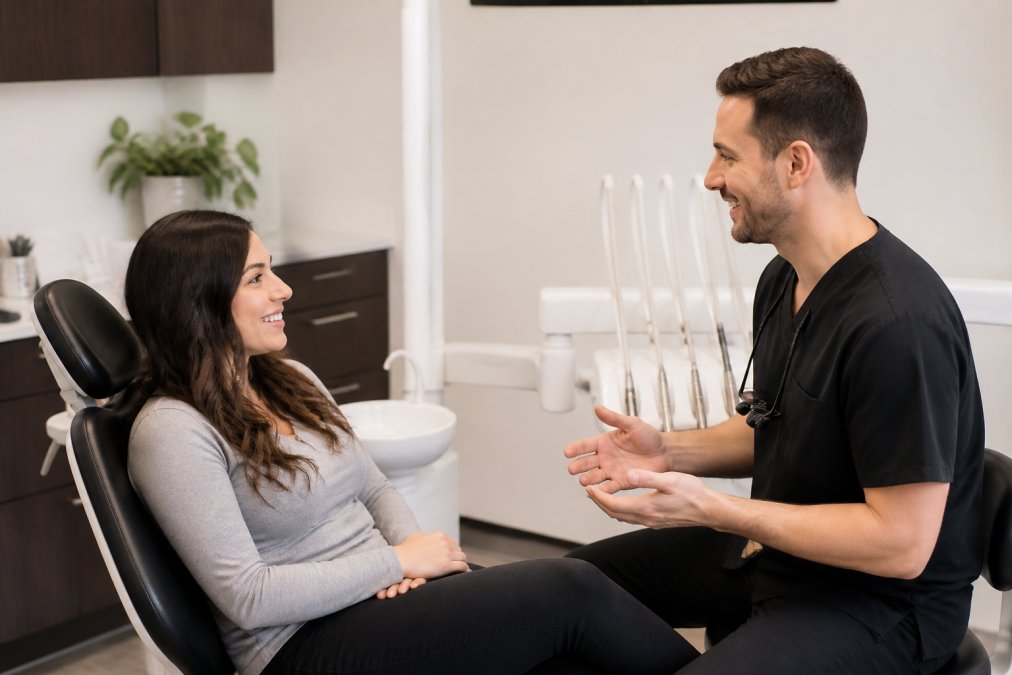
Discuss your past experiences. If you've had a painful procedure before, mention it. If a previous dentist rushed you or didn't listen, say so. This context helps your current dentist understand your concerns and avoid repeating those mistakes.
Establish a signal. Many anxious patients benefit from a hand signal that means "pause." You can raise your hand if you need a break. Knowing you can stop whenever you need to gives you back control and reduces panic.
Ask questions about the procedure. Understanding what will happen, how long it will take, and what you'll feel can reduce fear. Uncertainty often makes anxiety worse. Knowledge helps.
Breathing Exercises for Dental Procedures
Controlled breathing is one of the most powerful tools for managing dental anxiety. When you're calm, your body follows. When your body is tense, your mind follows too. Breathing breaks that cycle.
The 4-4-4 technique works well during procedures:
- Breathe in slowly through your nose for a count of four
- Hold for a count of four
- Exhale slowly through your mouth for a count of four
- Repeat until you feel calmer
Practice this at home before your appointment. Use it in the waiting room and during the procedure itself. The more familiar it is, the more automatic it becomes when you need it.
Box breathing is another option:
- Inhale for four counts
- Hold for four counts
- Exhale for four counts
- Hold for four counts
- Repeat five to ten times
Deep breathing lowers your heart rate and blood pressure. It signals to your nervous system that you're safe. Your muscles relax. Your mind quiets.
Preparing Yourself Before Your Appointment
The days before your surgery matter. Preparation reduces anxiety significantly.
Get information. Ask your dentist for details about the procedure. What will happen first? How long will it take? What will you feel? What comes after? Written information or videos help you visualize the experience.
Arrange support. Bring someone you trust to your appointment. Having a familiar face in the waiting room and someone to drive you home afterward makes a real difference. Many people feel calmer knowing they're not alone.
Avoid caffeine. Coffee and energy drinks increase anxiety and jitteriness. Skip them on the day of your procedure.
Get good sleep. A well-rested body handles stress better. Aim for seven to nine hours the night before.
Eat a light meal. Don't come hungry or with a full stomach. Eat something light a few hours before your appointment.
Wear comfortable clothes. Tight clothing increases physical tension. Wear something loose and comfortable.
Arrive early. Rushing increases anxiety.
Managing Financial Anxiety and Treatment Decisions
Money worries add another layer to dental anxiety. You're already nervous about the procedure. Adding cost concerns makes it worse.
Recovery and Moving Forward After Dental Surgery
Recovery after dental surgery involves two parallel processes: physical healing and psychological recovery. Both matter for your long-term willingness to return for future care.
Physical recovery essentials:
Psychological recovery, the often-overlooked piece:
Frequently Asked Questions
What is the most effective way to manage dental anxiety during surgery?
Managing dental anxiety combines multiple strategies: clear communication with your dental surgeon about your fears, understanding what to expect during the procedure, controlled breathing techniques, and discussing sedation options if needed. Many patients find that knowing exactly what will happen reduces fear significantly. Your dentist can work with you to create a personalized plan that addresses your specific anxieties, whether through relaxation techniques, distraction methods, or pharmacological interventions like nitrous oxide or conscious sedation.
Can sedation dentistry help if I have severe dental anxiety?
Yes, sedation dentistry is specifically designed for patients with dental phobia or severe anxiety. Options range from nitrous oxide (laughing gas) that keeps you conscious but relaxed, to conscious sedation where you're deeply relaxed but can still respond to commands. Your dental surgeon will evaluate your anxiety level, medical history, and the complexity of your procedure to recommend the most appropriate sedation option. This allows you to receive necessary dental care while feeling safe and comfortable throughout the process.
How do I communicate my dental anxiety to my dental surgeon?
Be direct and specific about your fears when scheduling your appointment and during your initial consultation. Explain what aspects of dental procedures trigger your anxiety, whether it's the sounds, sensations, fear of pain, or loss of control. Share any previous negative experiences. Ask your surgeon to explain the procedure step-by-step before it begins and establish a hand signal you can use if you need a break. This therapeutic alliance between you and your dental team builds trust and helps them tailor their approach to your comfort level.
What breathing techniques can I use to calm anxiety before and during dental procedures?
The 4-7-8 breathing technique is highly effective: breathe in through your nose for 4 counts, hold for 7 counts, then exhale through your mouth for 8 counts. Repeat 4-5 times. Deep diaphragmatic breathing, breathing slowly and deeply from your belly rather than your chest, activates your body's relaxation response. Progressive muscle relaxation, where you tense and release muscle groups, also reduces physical tension. Practice these techniques before your appointment so they feel natural during your procedure. Your dental surgeon can remind you to use them during your visit.
Managing dental anxiety for surgery doesn't mean white-knuckling through the experience. It means working with a dental team that understands your fear and has tools to help. At EPO Dental Specialists, we specialize in working with anxious patients. Our team uses advanced technology, offers sedation options, and takes time to listen to your concerns. Request an appointment with us today and take the first step toward dental care that feels manageable and supportive.