 how-to
What to Do for a Knocked Out Tooth: First Aid Steps
Last Updated: October 23, 2026
Quick Summary
A knocked out tooth is a dental emergency requiring immediate action. Handle the tooth by the crown only, rinse it gently with cool water, store it in milk if you cannot reinsert it, and reach emergency dental care within 30 minutes for the best chance of saving it.
- Hold the tooth by the crown only; never touch the root or periodontal ligament fibers.
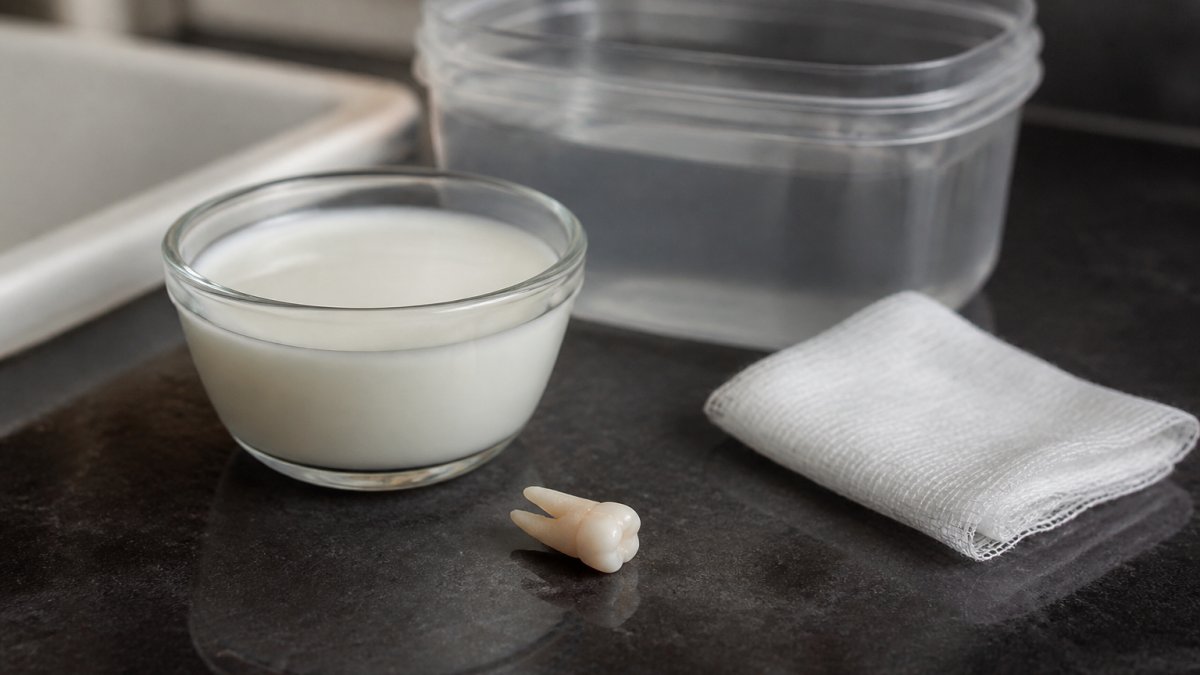
- Milk is the gold standard storage method and keeps ligament cells alive until you reach a dentist.
- Reinsert an adult tooth yourself only if it is clean, intact, and the socket is undamaged.
- Chances of success are excellent within 30 minutes, still savable up to 1 hour, and decline sharply beyond 2 hours.
- Do not reinsert a baby tooth; it will be replaced naturally by a permanent tooth.
Table of Contents
- What to Do Immediately After a Tooth Is Knocked Out
- How to Pick Up and Handle the Knocked-Out Tooth
- Rinsing and Cleaning the Tooth Safely
- What to Do If an Adult Tooth Is Knocked Out
- How to Store a Knocked-Out Tooth Until You Reach a Dentist
- How Long Can a Knocked-Out Tooth Survive Outside the Socket
- Knocked-Out Baby Tooth: Different Approach
- When to Seek Emergency Dental Care
- Frequently Asked Questions
What to Do Immediately After a Tooth Is Knocked Out
A knocked out tooth is a dental emergency, your response in the first minutes can mean the difference between saving and losing it permanently.
Stay calm and assess the situation
Locate the tooth fast, check your mouth, the ground, and any debris. Wipe away blood gently with a clean cloth so you can see the injury, and avoid rinsing your mouth at this stage.
Check for other injuries
A knocked-out tooth often comes with other injuries. Check for:
- Bleeding that won't stop after 10 minutes of pressure
- Severe pain in your jaw or face
- Difficulty swallowing or speaking
If any apply, seek emergency medical care immediately, call 911 for severe bleeding or a suspected head injury. Your overall safety comes first.
How to Pick Up and Handle the Knocked-Out Tooth
Once located, handle the tooth with extreme care, how you touch it determines whether it can be saved.
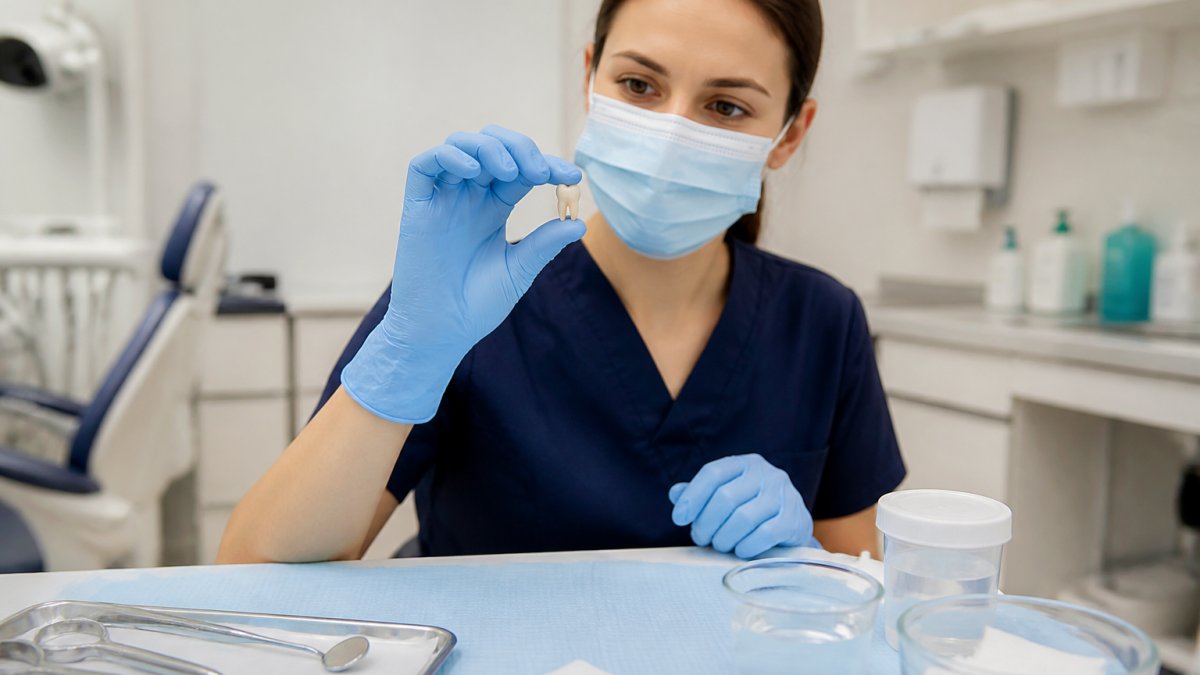
Hold the tooth by the crown only, the white chewing surface. Never touch the root below the gum line; its delicate periodontal ligament fibers determine whether replantation succeeds.
If dirt clings to the root, don't scrape it off, scraping damages the periodontal ligament. Rinse your hands first, and work quickly but carefully.
Rinsing and Cleaning the Tooth Safely
Hold the tooth by the crown and let cool, clean water flow gently over it to remove dirt without damaging the root.
Do not scrub or use a brush, soap, or chemicals, these destroy the periodontal ligament. Rinse for just a few seconds to remove loose debris, and never soak the tooth.
What to Do If an Adult Tooth Is Knocked Out
An adult tooth is worth saving, unlike a baby tooth, there is no replacement coming. Work through these decision points in order.
Step 1: Decide whether the tooth can go back in
Reinsertion is usually best for a permanent tooth when conditions are right. Quick screen:
- Clean adult tooth, intact root, visible socket: Reinsert it yourself if you can do so calmly. This is the highest-value action you can take.
- Dirty tooth (mud, sand, debris on the root): Rinse briefly with cool water, then reinsert if the root is intact. Do not scrub.
- Broken, cracked, or root-fractured tooth: Do not force it back in. Store it in milk and let a dentist assess it.
If unsure, store the tooth in milk and head to emergency dental care, a dentist can reinsert a moist tooth with a strong chance of survival.
Step 2: Reinsert the tooth carefully
If the screen points to reinsertion:
- Hold the tooth by the crown only. Never touch the root, its ligament fibers allow the tooth to reattach.
- Align the root with the socket. The rounded front should face outward, matching neighboring teeth. If it won't slide in with light pressure, stop, do not force it.
- Push gently until it seats. Steady, light pressure is enough.
- Bite on clean gauze or a soft cloth for 10-15 minutes to stabilize the tooth and control bleeding. Don't wiggle it afterward.
- Go straight to a dentist. Go straight to a dentist.
According to Cochrane's review of traumatised permanent front teeth, replanting the tooth as quickly as possible is often the best option for preserving it long-term.
Step 3: Know when to skip home reinsertion
Skip home reinsertion if:
- The socket is damaged, actively bleeding, or hard to see.
- The tooth is broken, cracked, or missing part of the root.
- You are too anxious or shaky to place it accurately.
In these cases, store the tooth in milk and go to emergency care so a dentist can assess the socket before replantation.
Step 4: What to tell the dentist when you arrive
Bring the tooth in its storage container, and be ready to answer:
- How long ago the tooth came out.
- How it was stored (milk, saline, saliva, or dry).
- Whether you reinserted it and for how long.
These details shape the treatment plan, including imaging, splinting, or a root canal.
How to Store a Knocked-Out Tooth Until You Reach a Dentist
If you can't reinsert the tooth, keep it moist, drying out kills the periodontal ligament cells.
Best storage options: milk and saline
Milk is the gold standard. Whole, low-fat, or skim all work, it maintains the right pH and osmolarity to keep periodontal ligament cells alive.
Saline is a second choice and works nearly as well for short periods.
Your own saliva works in a pinch, hold the tooth between your cheek and lower teeth without chewing, for 30 minutes or less.
What not to use for storage
Avoid these storage methods:
- Tap water (damages cells through osmotic shock)
- Dry cloth or paper towel (dries the tooth out)
- Alcohol or mouthwash (kills periodontal ligament cells)
Stick with milk, saline, or saliva only.
Never store a knocked-out tooth in tap water. The osmotic imbalance damages the periodontal ligament cells within minutes (pubmed.ncbi.nlm.nih.gov). Even though water seems like the logical choice, it's one of the worst options. Use milk instead.
How Long Can a Knocked-Out Tooth Survive Outside the Socket
Time is your enemy.
Within 30 minutes: The ideal window, chances of success are excellent.
30 minutes to 1 hour: Still savable, but the window is closing.
1 to 2 hours: Survival is possible but less likely as ligament cells deteriorate; success rates drop.
Beyond 2 hours: Survival chances decline sharply and the outcome is less predictable.
The key factor is moisture: a tooth stored in milk for 2 hours has better odds than one left dry for 30 minutes. Storage method matters as much as time elapsed.
Survival chances depend on how quickly you act and how you store the tooth.
| Time Outside Socket | Survival Outlook | Key Factor |
|---|---|---|
| Within 30 minutes | Excellent chances | Ideal window for success |
| 30 minutes to 1 hour | Still savable | Window closing, keep in milk |
| 1 to 2 hours | Possible but less likely | Ligament cells deteriorate |
| Beyond 2 hours | Chances decline sharply | Outcome less predictable |
Knocked-Out Baby Tooth: Different Approach
Baby teeth (primary or deciduous) follow different rules.
Do not try to reinsert a baby tooth, reinsertion can damage the developing permanent tooth underneath, and the baby tooth's root is designed to dissolve and shed naturally.
Store the tooth in milk or saline if you want to keep it as a keepsake, but focus on your child's comfort and checking for other injuries. Call your dentist or pediatrician to confirm the tooth is gone and check for damage.
When to Seek Emergency Dental Care
Do not wait. Seek emergency dental care immediately after a tooth is knocked out. Book an emergency dental appointment right away.
Timing: how urgent is it?
- Immediately (within 30 minutes): An adult tooth has been knocked out and you have reinserted it or stored it in milk. This is the best window for success.
- Within 1 hour: You could not reinsert the tooth and need professional help.
- As soon as possible: A baby tooth is knocked out, or there are other facial injuries but no emergency red flags.
What to expect during the dental visit
A typical emergency visit follows a predictable sequence:
- History and examination. The dentist reviews how and when the tooth came out, how it was stored, and whether you reinserted it, then checks the socket, tooth, and neighboring teeth for fractures or mobility.
- Imaging. X-rays, sometimes a cone-beam CT scan, check the root, socket, and surrounding bone, and rule out a retained root fragment or jaw fracture.
- Cleaning and preparation. The dentist cleans the tooth and socket more thoroughly than is safe at home.
- Replantation. If not already reinserted, the dentist places the tooth back into the socket with precision.
- Splinting. A flexible splint is bonded to the tooth and its neighbors, usually for one to two weeks for a simple avulsion, longer with bone injury. Some flexibility supports ligament healing.
- Tetanus and medication review. The dentist or physician asks about tetanus status, since a knocked-out tooth often involves a contaminated wound. Antibiotics aren't routine but may be prescribed based on the injury.
- Follow-up scheduling. Expect repeat visits to check the tooth's vitality, mobility, and color, plus follow-up images.
Root canal and long-term monitoring
A knocked-out adult tooth often loses its blood supply even when replantation succeeds. Many practitioners plan a root canal for a replanted permanent tooth, within the first couple of weeks or later, depending on the tooth's maturity and the injury, to prevent infection while the ligament reattaches.
Problems can appear months later. Watch for:
- The tooth turning gray or dark.
- New pain, swelling, or a bad taste.
- Increased looseness after the splint is removed.
Report any of these promptly; they can signal infection or root resorption.
Aftercare at home
- Eating: Soft foods for the first week or two; avoid biting directly on the injured tooth.
- Oral hygiene: Brush gently around the splint with a soft brush. A chlorhexidine rinse is sometimes recommended short-term; follow your dentist's instructions.
- Activity: Avoid contact sports and rough play until cleared; wear a mouthguard when you return.
Our team uses advanced techniques and state-of-the-art technology to assess your tooth and socket, splint it for stability, and monitor healing closely. Learn more about traumatic injury treatment services available after your emergency first aid steps. Seeking professional care gives your tooth the best chance of survival.
A knocked-out tooth is a time-sensitive emergency. Keep it moist in milk, handle it by the crown only, and reach emergency care within 30 minutes if possible. Expect imaging, possible splinting, and follow-up visits, and report color changes, pain, or swelling promptly.
Frequently Asked Questions
What should I do if my adult tooth is knocked out?
Find the tooth immediately and handle it by the crown only, avoiding the root. Rinse gently with clean water or milk if it's dirty, but do not scrub. If possible, reinsert the tooth into its socket and hold it in place. If reinsertion isn't possible, store the tooth in milk or saline solution and get to an emergency dentist as quickly as you can. Time is critical for tooth survival.
How long can a knocked-out tooth survive?
An avulsed tooth has the best chance of survival if replanted within 30 minutes, though teeth can sometimes be saved even after longer periods. Keep the tooth moist at all times to preserve the periodontal ligament cells on the root surface. Dry conditions damage these cells rapidly, reducing the likelihood of successful reattachment. The sooner you reach a dentist, the better the outcome.
How should I store a knocked-out tooth until I reach a dentist?
Store the tooth in cold milk or saline solution if reinsertion isn't possible. Milk is widely available and provides an ideal environment for preserving the root surface. Avoid tap water, which can damage the periodontal ligament cells. If neither milk nor saline is available, you can temporarily place the tooth in your mouth (between your cheek and gum) to keep it moist, but milk or saline is preferable.
Can a knocked-out baby tooth be put back in?
No. Do not attempt to reinsert a primary (baby) tooth. Baby teeth have different root structures and reinsertion can damage the developing permanent tooth underneath. Instead, clean any visible debris gently, control any bleeding with gauze, and contact your dentist. The baby tooth will eventually be replaced by the permanent tooth, so focus on managing pain and preventing infection.