 how-to
How to Stop Jaw Clicking When Chewing
Last Updated: November 2, 2026
Quick Summary
Jaw clicking when chewing is usually caused by the cartilage disc in the temporomandibular joint slipping slightly out of position and snapping back during movement. Muscle tension from clenching, stress, and hard foods, plus bite alignment and dental factors, can also contribute. Clicking without pain is common and does not require treatment.
- Disc displacement is the most common structural cause of jaw clicking.
- Clenching, grinding, stress, and hard foods can make an existing click louder.
- See a dentist if clicking comes with pain, locking, or a change in bite.
- Soften your diet, chew evenly, and stop gum and ice chewing to reduce strain.
- A jaw that suddenly locks is not a wait-and-see problem.
Table of Contents
- What Jaw Clicking and Popping Actually Sounds Like
- How the Temporomandibular Joint Produces That Sound
- TMJ Clicking Causes: Disc Movement, Muscle Tension, and Bite Alignment
- Temporomandibular Disorder Symptoms to Watch For
- Jaw Pain When Chewing: What It Tells You
- When Jaw Clicking Is Harmless and When It Is Not
- When to See a Dentist for Jaw Clicking
- Practical Steps to Reduce Clicking While Chewing
- Frequently Asked Questions
What Jaw Clicking and Popping Actually Sounds Like
Jaw clicking is a joint noise you hear or feel when the lower jaw moves, and it usually sounds like a soft pop, a snap, or a faint crackle near the ear.
The noise itself is not a diagnosis. It is a signal.
Some people notice a single pop when they open wide. The National Institute of Dental and Craniofacial Research's overview of TMD notes that clicking or popping without pain is common and does not require treatment.
That distinction matters. Sound alone rarely tells the full story.
Below, we break down what produces the sound, which causes matter, and how to tell harmless clicking from something that needs a dentist.
How the Temporomandibular Joint Produces That Sound
The temporomandibular joint, or TMJ, connects your lower jaw to your skull just in front of each ear.
That disc is the key to most jaw popping. When the disc slips slightly out of position and then snaps back during movement, you hear a click.
Muscles and ligaments around the joint add to the mix.
Think of it like a door hinge that is slightly out of alignment. It still opens, but it makes noise.
TMJ Clicking Causes: Disc Movement, Muscle Tension, and Bite Alignment
TMJ clicking causes fall into three main groups: disc movement, muscle tension, and bite alignment. Most people have a mix rather than one single trigger, and the click alone does not prove which one is at work.
Disc Displacement and Disc Position
Disc displacement is the most common structural cause of jaw clicking. The disc can slip forward when you open, then pop back into place when you close.
Disc movement is a frequent source of joint noise. For a closer look at the mechanics behind the sound, read why your jaw clicks when you chew food. Whether a click predicts a disorder is less certain, and many people with disc movement have no pain and no functional limit.
Clenching, Stress, and Hard Foods
Muscle tension is the cause most people overlook. Clenching and grinding, often during sleep or stressful periods, tire the jaw muscles and change how the joint tracks. Hard foods add load; chewing ice, tough jerky, or hard candy repeatedly stresses the joint and can make an existing click louder.
A common mistake is assuming the click is purely mechanical. In practice, stress and clenching often drive the noise more than the joint's structure does.
Bite Alignment and Dental Factors
Bite alignment is often named as a cause, but the evidence is more nuanced than headlines suggest. Missing teeth, tooth wear, and an uneven bite can load one joint more than the other, and correcting a clear dental problem sometimes reduces symptoms. However, a click alone does not prove a bite problem, and bite correction is not a guaranteed fix for joint noise.
A Broader Differential: What Else Can Cause Clicking
Disc movement and TMD are not the only explanations. A careful evaluation considers:
- Muscular causes. Myofascial pain and trigger points in the chewing muscles can produce clicking sensations and referred pain without structural joint change.
- Dental causes. A high restoration, an uneven bite, or a recent crown or filling can change how the jaw closes and create new noise.
- Injury. A blow to the jaw, a wide yawn, or a dental procedure that forced prolonged opening can strain the joint and its ligaments.
Evidence and Uncertainty
Separate what is established from what is uncertain. Established: the TMJ disc can move, muscles can tighten, and dental factors can load the joint unevenly. Uncertain: whether a specific bite pattern or a single click causes a disorder. Avoid assuming that a click or a misaligned bite proves TMD; a professional exam is what distinguishes association from cause.
Temporomandibular Disorder Symptoms to Watch For
Temporomandibular disorder symptoms go beyond sound. TMD is a group of conditions affecting the jaw joint and the muscles that control it, and clicking is only one possible sign (TMD).
Watch for these:
- Jaw pain or tenderness, especially in the morning
- Jaw stiffness, particularly after waking
- Limited jaw movement or trouble opening wide
One symptom alone is rarely enough to diagnose TMD. A pattern of symptoms, especially pain that keeps returning, is what points toward a professional evaluation.
Jaw Pain When Chewing: What It Tells You
Jaw pain when chewing is the symptom that changes the conversation. Clicking without pain is usually a watch-and-wait situation.
The pain can come from several places. It may stem from an inflamed joint, overworked chewing muscles, or an irritated disc.
Pain that appears only with certain foods points toward a load issue.
Either way, persistent pain deserves a professional look rather than a wait-and-see approach.
When Jaw Clicking Is Harmless and When It Is Not
Harmless clicking has a clear profile: no pain, no locking, and no limit on how wide you can open. The Mayo Clinic's overview of TMJ disorders notes that clicking or grating can accompany TMJ disorders, while a painless click alone may not need concern.
Clicking that needs attention looks different. See a dentist if you notice:
- Pain that lasts more than a few days
- Your jaw locks open or closed
- You cannot open as wide as you used to
Ignoring a jaw that suddenly locks can allow a manageable joint issue to become harder to treat.
When to See a Dentist for Jaw Clicking
See a dentist when jaw clicking comes with pain, locking, or a change in how your bite feels. A dentist can examine the joint, check your bite alignment, and rule out other causes. The harder question is timing: which clicks can wait for a routine visit, and which need to be seen promptly.
Self-Triage: Routine Visit vs. Prompt Evaluation
Use this simple split before you call anyone.
Schedule a routine dental visit (within a few weeks) if you have:
- Clicking or popping with no pain, no locking, and full jaw opening
- Mild soreness in the jaw muscles that eases with rest or soft foods
- Clicking that started gradually and has not changed in intensity
Seek prompt evaluation (within days) if you have:
- Jaw pain that persists more than a few days or wakes you at night
- A jaw that locks open or closed, even briefly
- A measurable loss of opening width compared with your normal
Seek urgent care the same day if you have:
- A jaw that will not open at all, or will not close
- Swelling with fever, or difficulty swallowing or breathing
- Severe pain after facial trauma, or a suspected fracture
What a Clinical Evaluation Involves
A thorough exam is more than a quick listen for a click. Expect the following.
- Health history. Your dentist will ask about stress, clenching and grinding, past jaw or facial injuries, recent dental work, and whether the click is tied to chewing, yawning, or opening wide.
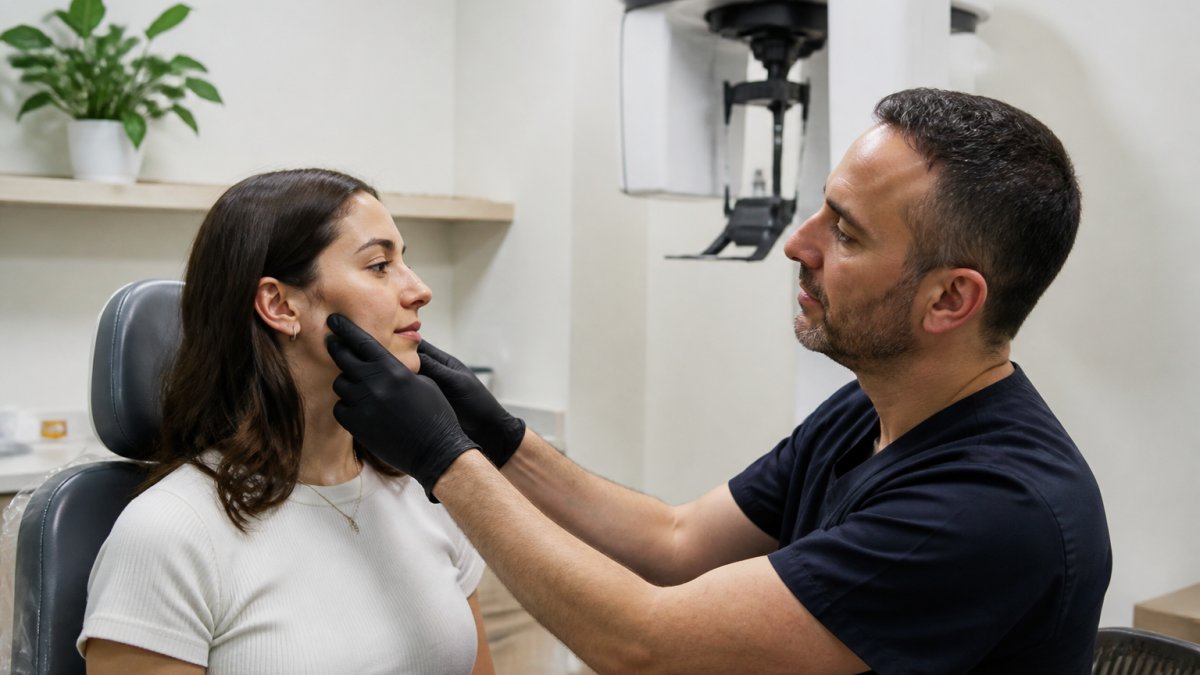
- Joint and muscle palpation. Gentle pressure over the joint and the chewing muscles (masseter, temporalis, pterygoids) checks for tenderness and trigger points.
- Range-of-motion measurement. Your dentist records how wide you can open (in millimeters), tracks the jaw's path for deviation, and notes any locking or catching.
- Bite and dental assessment. Tooth wear patterns, missing teeth, and bite alignment are checked, since dental factors can load the joint unevenly.
- Imaging, when indicated. Plain films or a cone beam scan may be considered if the exam suggests a structural issue, injury, or severe limitation. Imaging is not routine for a painless click.
In many cases the history and exam answer most questions, and imaging is generally reserved for cases where the exam points to something structural.
A Simple Symptom and Trigger Tracker
Bringing a short record to your appointment makes the consultation more useful. Note:
- Which side clicks, and whether it is one pop or repeated crackling
- Pain level (0-10) and whether it occurs with chewing, opening, or at rest
- Any locking episodes and how long they lasted
If you are deciding where to go, consult a qualified dental professional to see which specialists handle jaw and joint concerns. Our frequently asked questions cover common specialty dentistry questions before you get in touch. Before booking, you can meet your expert Richardson dentists who evaluate jaw clicking. You can also learn more about pain management for jaw and brace-related discomfort.
Practical Steps to Reduce Clicking While Chewing
You can lower the load on your jaw joint with a few practical habits. These steps will not cure a structural issue, but they reduce strain and often quiet the noise.
- Soften your diet. Swap hard, crunchy foods for softer options for a few weeks.
- Chew evenly. Avoid favoring one side, which overworks one joint.
- Stop gum and ice chewing. Both load the joint far more than food does.
A simple tracker helps your dentist see patterns fast:
| What to Track | Why It Matters | How Often |
|---|---|---|
| Pain level (0-10) | Shows whether the joint is inflamed | Daily |
| Clicking loudness | Tracks changes over time | Daily |
| Foods that trigger it | Identifies load issues | With meals |
| Jaw locking episodes | Flags a structural concern | Every event |
| Clenching or grinding | Links stress to symptoms | Nightly and morning |
Frequently Asked Questions
Is jaw clicking while chewing a sign of TMJ disorder?
Not always. Clicking or popping without pain is common and, in many cases, does not require treatment. A temporomandibular disorder is diagnosed when clicking comes with pain, tenderness, limited jaw movement, or locking. If the sound is painless and your jaw opens and closes normally, watch it rather than treat it. If clicking arrives with pain or stiffness, get a professional evaluation.
When should I see a dentist about a clicking jaw?
Book an appointment when clicking comes with jaw pain, tenderness in the facial muscles, jaw stiffness, limited jaw movement, or locking. The same applies if chewing becomes difficult or the noise changes from a soft pop to a grating crunch. Painless clicking alone is usually not urgent. A dentist can examine your jaw joint, check bite alignment, and rule out other causes before recommending anything.
Can jaw clicking go away on its own?
Often, yes. Painless clicking frequently resolves without treatment, and many people live with occasional pops for years. You can support that by resting the jaw, avoiding hard foods and gum, and reducing clenching. Clicking tied to disc displacement or an underlying temporomandibular disorder may persist. Track your symptoms for a few weeks; if the sound worsens or pain develops, seek an evaluation.
What is the 3 finger test for TMJ?
It is a simple self-check for how far your jaw opens. Place three stacked fingers vertically between your upper and lower front teeth. Most adults can fit about three fingers, roughly 35 to 40 millimeters of opening. Less than that suggests limited jaw movement. The test is a rough screen, not a diagnosis, so bring any restriction to a dentist for a proper exam.
Jaw clicking is usually harmless, but pain, locking, or a changing bite are signals worth acting on. If clicking is starting to interfere with eating or daily comfort, our multi-specialty team at EPO Dental Specialists can evaluate the joint, check your bite alignment, and build a plan around your needs. We use cone beam imaging for precise views of the joint and work closely with your personal dentist. Get started with EPO Dental Specialists and get clear answers about your jaw.