
 listicle
Orthodontic Care for Teenagers: A Complete Guide
Table of Contents
- Why Orthodontic Care Matters for Teenagers
- Clear Aligners vs. Traditional Braces for Teens
- The Orthodontic Consultation Process
- Cost of Braces for Teenagers
- Comprehensive Orthodontic Treatment Stages
- Managing Oral Hygiene with Braces
- The Psychological Impact of Braces on Teens
- Choosing the Right Orthodontist for Your Teenager
- Frequently Asked Questions
Last Updated: September 25, 2026
Why Orthodontic Care Matters for Teenagers
The teenage years represent a critical window for orthodontic care teenagers receive, when the jaw is still developing and teeth respond well to alignment efforts. Orthodontic care teenagers receive during these formative years can prevent more complex dental problems later in life and boost confidence.
Misaligned teeth, crowding, or bite issues affect appearance, chewing ability, and oral hygiene. Left untreated, they can cause uneven wear, difficulty cleaning between teeth, jaw problems, and reduced self-confidence during a critical developmental period.
Early consultation allows specialists to identify problems before they become severe. Some teenagers benefit from preventative orthodontics before all permanent teeth erupt; others need comprehensive treatment once permanent dentition is complete. Either way, starting during the teenage years typically results in shorter treatment duration and better outcomes.
Clear Aligners vs. Traditional Braces for Teens
Teenagers and parents must choose between clear aligners and traditional braces, each with distinct advantages depending on lifestyle, compliance, and orthodontic needs.
How Clear Aligners Work
Clear aligners use custom-made transparent trays worn for about two weeks each, gradually shifting teeth into alignment. They're nearly invisible, removable, and require no dietary restrictions.
Clear aligners don't interfere with sports, musical instruments, or eating. Teens can remove them for photos and special events. Cleaning is straightforward, and they provide a discreet option for appearance-conscious teenagers.
Clear aligners require high compliance, 20-22 hours daily, and cost more than traditional braces. They work best for mild to moderate spacing or crowding; severe bite problems typically require traditional braces.
Traditional Braces: Effectiveness and Lifestyle Impact
Traditional braces remain the gold standard for complex cases. Metal brackets bonded to each tooth are connected by wires applying consistent pressure. Ceramic braces offer a less visible option but are more fragile and expensive.
Traditional braces address virtually any orthodontic problem and work continuously without relying on patient compliance. Treatment timelines are often predictable and sometimes shorter than clear aligners for complex cases.
Braces require careful eating habits to avoid damaging brackets or wires, and oral hygiene becomes more challenging, requiring special flossing tools. However, many teenagers adjust easily since peers often wear braces too.
Sports participation is possible with braces; contact sports require a mouthguard. Musical instrument players may need adjustment time. Regular appointments every 4-8 weeks maintain progress.
| Feature | Clear Aligners | Traditional Braces |
|---|---|---|
| Appearance | Nearly invisible | Visible metal or ceramic |
| Removability | Yes (must wear 20-22 hrs/day) | Fixed in place |
| Dietary restrictions | None | Hard, sticky, crunchy foods avoided |
| Cleaning | Easy, remove and brush | Requires special flossing tools |
| Effectiveness for complex cases | Limited | Excellent |
| Treatment duration | 12-24 months typically | 18-36 months typically |
| Cost | Higher | Lower |
| Patient compliance required | High | Low |
The Orthodontic Consultation Process
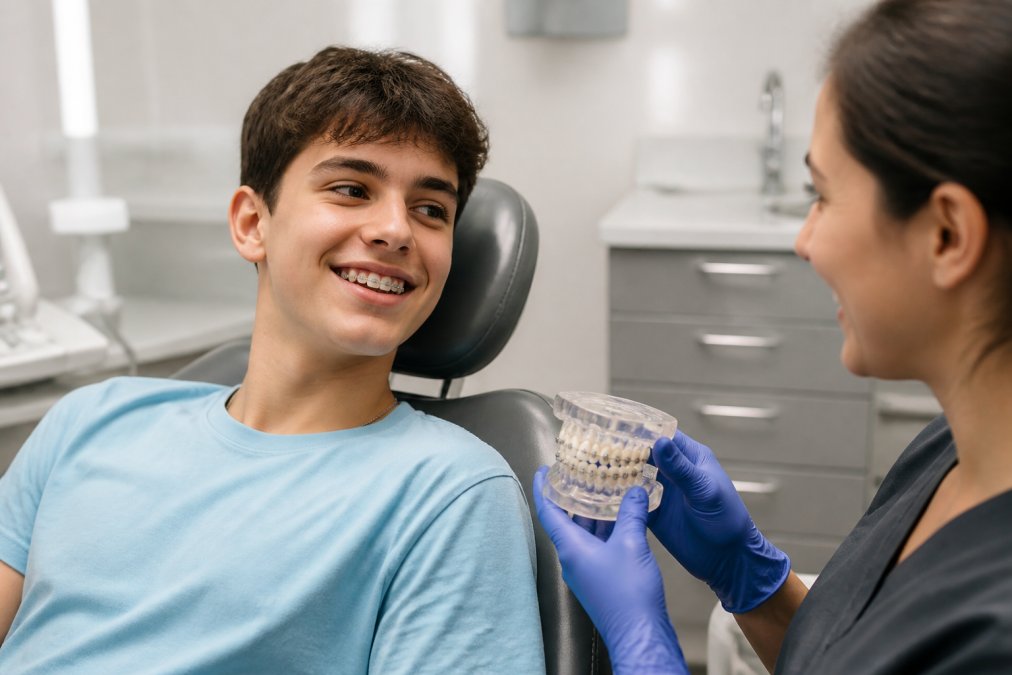
The first step is a comprehensive consultation to evaluate dental development, identify problems, discuss treatment options, and establish expectations.
What to Expect During Your First Visit
The orthodontist examines teeth, jaw alignment, and bite, and asks about discomfort, chewing difficulty, and goals. This conversation reveals both the clinical picture and the teenager's motivation level.
The orthodontist reviews dental history and asks about habits like thumb-sucking or tongue thrusting, which influence treatment planning.
Visual assessment evaluates facial symmetry, lip position, and how teeth and jaw relate to overall facial structure, all factors in treatment planning.
Diagnostic Imaging and Treatment Planning
The orthodontist orders diagnostic imaging including digital X-rays and cone beam scanners, which provide three-dimensional imaging for complex cases.
The orthodontist develops a treatment plan outlining which teeth move, the sequence, expected duration, and cost, explaining the reasoning behind each recommendation.
Cost of Braces for Teenagers
Understanding orthodontic costs upfront helps families plan. Costs vary based on case complexity, appliance type, and treatment duration.
Insurance Coverage and Financing Options
Many dental insurance plans cover 50% of orthodontic costs up to $1,500-$2,000 lifetime maximum, but coverage varies significantly. Some plans exclude orthodontics or have waiting periods.
Contact your insurance company before treatment to understand coverage details, annual maximums, percentages covered, waiting periods, and age limitations.
Many practices offer financing options including interest-free payment plans, monthly arrangements, or third-party financing. Some offer discounts for upfront payment or multiple family members.
Comprehensive Orthodontic Treatment Stages
Orthodontic treatment progresses through distinct phases. Understanding these stages helps families know what to expect.
Active Treatment Phase
The active treatment phase, lasting 18-36 months, involves teeth gradually moving into new positions through consistent pressure from braces or aligners. (Source: Consumer Price Index data)
Regular appointments are essential. With traditional braces, visits occur every 4-8 weeks; with aligners, less frequently. Missing appointments or not following instructions delays progress.
Excellent oral hygiene is critical during active treatment to prevent decay and gum disease. Teenagers must brush after every meal and use special flossing techniques.
Mild soreness after adjustments typically resolves within a few days. Over-the-counter pain relievers and soft foods help manage temporary discomfort.
Retention and Long-Term Care
Once teeth reach desired positions, the retention phase begins and lasts indefinitely. Without retention, teeth naturally shift back, a process called relapse.
Retainers hold teeth in place while supporting structures stabilize. Most orthodontists recommend full-time wear for several months, then nightly for years, then several nights weekly indefinitely.
Fixed retainers bond to the back of teeth permanently; removable retainers are worn at night. Many orthodontists recommend combining both for optimal results.
Retention is not optional to maintain results. Skipping retainer wear is the most common reason for relapse. Teenagers must understand this lifelong commitment before treatment begins.
Managing Oral Hygiene with Braces
Excellent oral hygiene during treatment is critical. Braces create additional surfaces where food and plaque accumulate, increasing decay and gum disease risk.
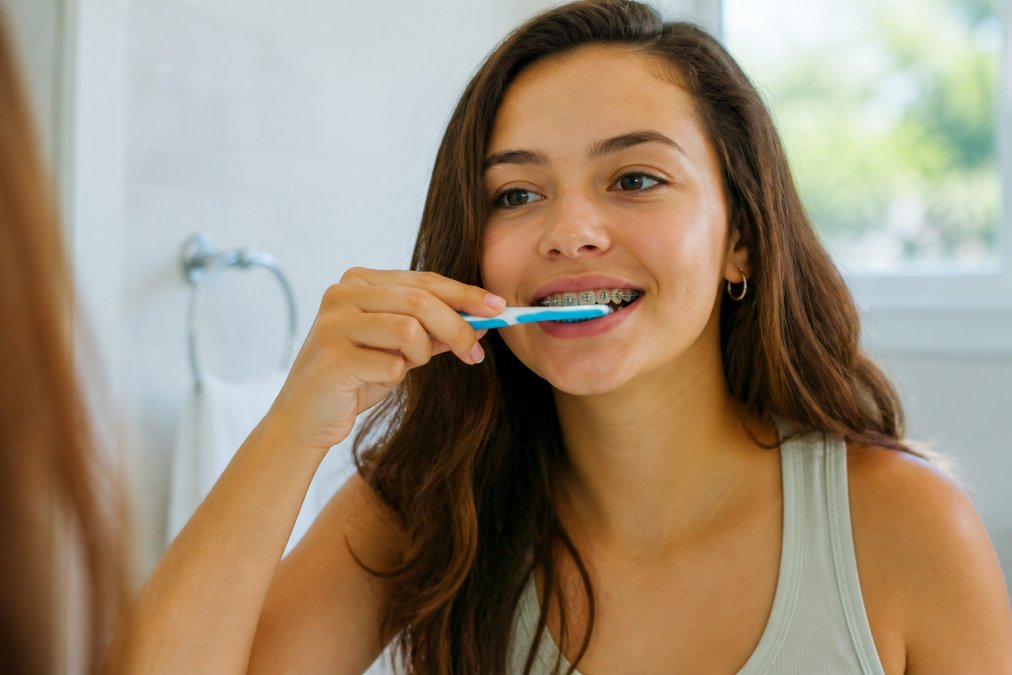
Teenagers should brush after every meal with a soft-bristled toothbrush at 45 degrees toward the gumline, spending extra time around brackets and wires, typically 3-5 minutes per session.
Flossing requires special techniques: threading floss under wires, using water flossers, or interdental brushes. The goal is cleaning between every tooth and under wires daily.
Teenagers should avoid foods that can damage braces or cause problems. Hard foods like nuts, hard candy, and ice can break brackets or bend wires. Sticky foods like caramel, taffy, and chewing gum can pull brackets loose or get stuck in the wires. Crunchy foods like raw carrots and apples should be cut into small pieces. Sugary drinks and foods increase cavity risk, so limiting soda, sports drinks, and candy is important.
Regular dental checkups with their general dentist should continue during orthodontic treatment. The general dentist monitors for any signs of decay or gum disease and provides professional cleanings to remove tartar that brushing and flossing can't reach. Communication between the orthodontist and general dentist ensures comprehensive care.
The Psychological Impact of Braces on Teens
While the physical aspects of orthodontic care are straightforward, the psychological and emotional impact on teenagers deserves serious consideration. Adolescence is a time of significant self-consciousness about appearance, and wearing braces can affect a teenager's confidence and social interactions.
Many teenagers worry about how their peers will perceive them with braces. However, orthodontic care has become so common that most teenagers encounter classmates wearing braces, reducing the stigma significantly. In many schools, braces are simply part of the teenage experience rather than something unusual or embarrassing.
The psychological benefits of completing orthodontic treatment often outweigh any temporary discomfort during treatment.
Choosing the Right Orthodontist for Your Teenager
Selecting an orthodontist is one of the most important decisions in your teenager's orthodontic journey. The right specialist will have the expertise to address your teenager's specific needs, communicate clearly, and create an environment where your teen feels comfortable and supported.
Frequently Asked Questions
Does dental insurance typically cover braces for teenagers?
Many dental insurance plans do cover orthodontic care for teenagers, though coverage varies by plan. Some plans cover 50% of orthodontic treatment costs, while others may cover a fixed amount or percentage up to a lifetime maximum. Orthodontic treatment is often classified as a separate benefit category. Contact your insurance provider to review your specific coverage details, including any age limits, waiting periods, or pre-authorization requirements before starting orthodontic care for your teenager.
What is the average cost of braces for a teenager, and what financing options are available?
The cost of braces for teenagers varies depending on the type of appliance, treatment complexity, and duration. Financing options typically include payment plans, in-house financing with flexible monthly payments, and coordination with dental insurance benefits. Many orthodontic practices offer interest-free or low-interest payment plans to make treatment more affordable. Contact your orthodontist directly for a customized cost estimate and to discuss financing options that fit your family's budget.
Is Invisalign or traditional braces better for an active teenager?
Both options work effectively for teenagers, but the choice depends on lifestyle and compliance. Traditional braces are highly effective for complex cases and don't require the discipline of removing aligners for meals and cleaning. Invisalign Teen offers discretion and easier oral hygiene since aligners are removable, but requires consistent wear (20-22 hours daily) for success. Discuss your teenager's activities, oral hygiene habits, and preferences with your orthodontist to determine which option suits them best.
How long does orthodontic treatment typically take for a teenager?
Most orthodontic treatment for teenagers takes between 18 months to 3 years, depending on the severity of the malocclusion, the type of appliance used, and how well the teenager follows care instructions. Factors like bone density, jaw growth, and patient compliance can affect treatment duration. Your orthodontist will provide a more specific timeline during the consultation after examining your teenager's dental records and taking diagnostic images.