
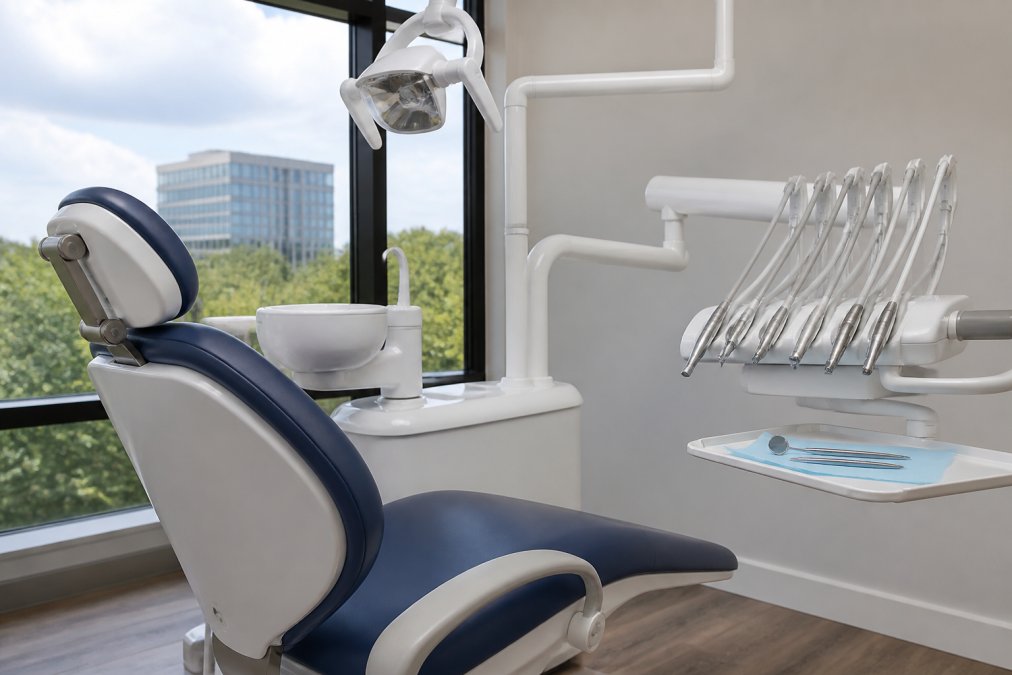
 listicle
Best Dental Specialists in Richardson: 2026 Guide
Table of Contents
- Why Choose a Dental Specialist in Richardson
- When to See a Periodontist for Gum Disease and Oral Health
- EPO Dental Specialists: Multi-Specialty Care for Complex Cases
- Benefits of Multi-Specialty Dental Practices for Comprehensive Care
- Why Does My Jaw Click When I Chew Food: Signs You Need a Specialist
- What to Expect During Your First Specialist Consultation
- Insurance, Payment Options, and Cost Transparency
- Frequently Asked Questions
Last Updated: September 25, 2026
Why Choose a Dental Specialist in Richardson
Finding the right best dental specialists in Richardson means understanding when a general dentist isn't enough. Your regular dentist handles routine cleanings, fillings, and preventive care, but complex cases demand focused expertise. A periodontist treats advanced gum disease. An endodontist specializes in root canal therapy. An orthodontist aligns your bite. When your dental problem extends beyond the basics, a specialist delivers precision that general practitioners simply cannot match.
At EPO Dental Specialists, we see patients every week who've been referred by their general dentist because the case requires advanced training. A tooth with a curved root canal. Severe periodontal disease that's progressed beyond standard treatment. Bite problems affecting jaw function and causing pain. These situations call for someone who's spent years focusing exclusively on one discipline.
The difference shows up immediately: more treatment options, and outcomes that preserve your natural teeth. You're not bouncing between offices, many specialists work in isolation. At a multi-specialty practice, you get endodontics, periodontics, and orthodontics under one roof, coordinated with your personal dentist.
When to See a Periodontist for Gum Disease and Oral Health
Gum disease progresses in stages, and knowing when to escalate care separates people who keep their teeth from those who lose them. Your regular dentist can handle gingivitis, the early stage where gums bleed during brushing. But once the infection spreads below the gum line and starts destroying bone, you need a periodontist.
A periodontist is a dental specialist who focuses entirely on gum health and the structures supporting your teeth. When your general dentist mentions "bone loss" or "deep pockets," that's the signal to call a periodontist. Early intervention at this stage, before tooth mobility becomes noticeable, often saves teeth that would otherwise require extraction.
Common reasons to see a periodontist include persistent bad breath despite good oral hygiene, gums that bleed during flossing, teeth that feel loose, or gaps opening between teeth. Periodontal disease doesn't announce itself loudly until it's advanced. By the time you feel pain, significant damage has already occurred. A board-certified periodontist can assess the damage, determine whether your natural teeth can be saved, and design a treatment plan that restores oral health.
EPO Dental Specialists: Multi-Specialty Care for Complex Cases
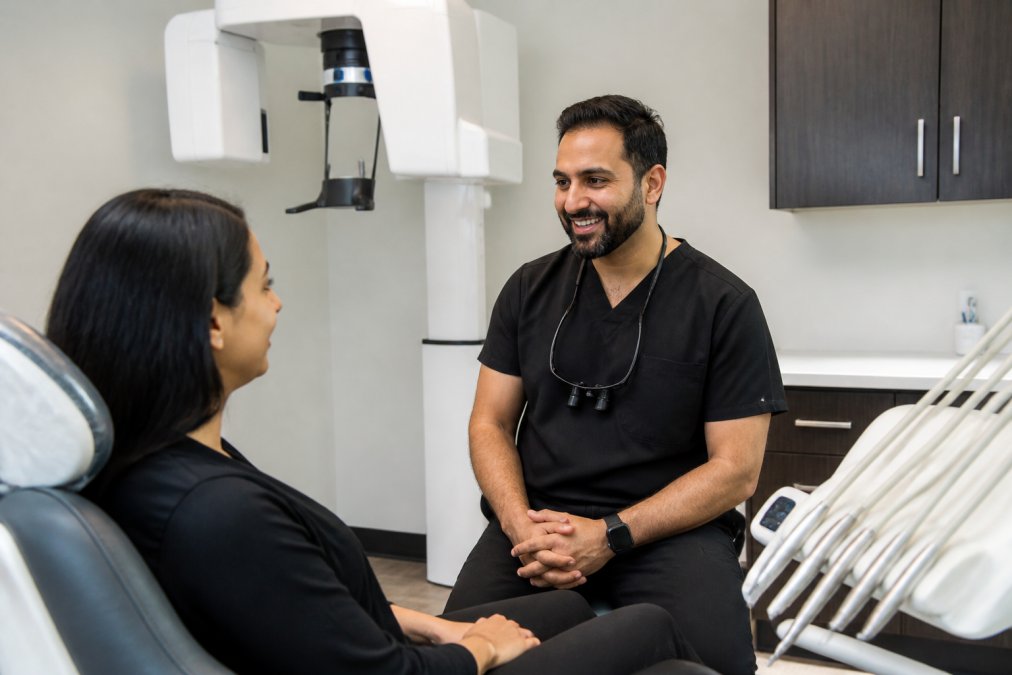
Not every dental problem fits neatly into one specialty. A patient with severe gum disease might also need root canal therapy on a compromised tooth, followed by orthodontic adjustment to correct bite problems created by the disease. Coordinating care across three specialists, each working in separate offices, each with different treatment philosophies, creates delays and gaps in communication.
EPO Dental Specialists eliminates that friction. Our multi-specialty team includes board-certified periodontists, endodontists trained in complex surgical cases, and certified orthodontists. They review your case together, coordinate treatment sequencing, and communicate directly with your general dentist. You get consistency, faster treatment, and outcomes that account for how each discipline affects the others.
Endodontics and Root Canal Therapy
An endodontist specializes in saving teeth that are severely infected or damaged. Root canal therapy, removing the infected pulp inside the tooth, disinfecting the canal system, and sealing it, requires precision that general dentists often refer to specialists. A tooth with calcified canals, curved anatomy, or previous failed treatment demands the advanced training and specialized equipment an endodontist brings.
Many patients fear root canal treatment because they've heard it's painful. The reality: the pain you feel before treatment comes from the infection inside the tooth. Root canal therapy relieves that pain by removing the source. Modern techniques make the procedure more comfortable than it was decades ago.
Periodontics and Advanced Gum Treatment
Periodontal disease destroys the bone and ligaments holding your teeth in place. Once that destruction begins, only a periodontist can stop it and sometimes reverse it. Advanced techniques like scaling and root planing remove tartar and bacteria below the gum line. Bone grafting and guided tissue regeneration can restore some of the bone loss caused by disease.
A board-certified periodontist evaluates whether your teeth can be saved or whether extraction and implant replacement makes more sense. This decision requires deep knowledge of bone anatomy, implant success rates, and long-term outcomes. Your general dentist can recognize the problem; a periodontist determines the solution.
Orthodontics and Smile Alignment
Orthodontic treatment isn't just about cosmetics, misaligned teeth create bite problems that stress your jaw joints and make cleaning impossible. Food traps between crowded teeth, accelerating decay. An overbite or underbite changes how force distributes across your teeth, causing premature wear and bone loss.
A certified orthodontist evaluates your bite, designs a treatment plan, and monitors progress. Modern options include traditional braces and clear aligners like Invisalign, which appeal to adults who want discreet treatment. Treatment duration depends on the severity of misalignment. An orthodontist working within a multi-specialty practice can coordinate with your endodontist or periodontist to ensure tooth movement doesn't compromise treatment in other areas.
Benefits of Multi-Specialty Dental Practices for Comprehensive Care
When your dental needs span multiple specialties, a coordinated approach delivers better outcomes than fragmented care. Here's what changes when specialists work together:
Treatment sequencing makes sense. Should you extract a compromised tooth or save it with a root canal and bone graft? A multi-specialty team evaluates both options together, considering how each choice affects your overall oral health and long-term outcomes.
Communication eliminates gaps. Your endodontist knows what the periodontist is planning. Your orthodontist understands which teeth are being restored. Your general dentist receives updates on every step. No one repeats diagnostics or works at cross-purposes.
Efficiency saves time and money. Coordinated care reduces the total number of appointments and prevents redundant treatment. You're not waiting weeks between specialists or discovering mid-treatment that one specialist's work conflicts with another's plan. (Source: the American Association of Endodontists)
Patient experience improves. You develop a relationship with a team instead of bouncing between unfamiliar offices. Staff understand your anxiety, your preferences, and your goals. Continuity of care builds trust and makes complex treatment more manageable.
Why Does My Jaw Click When I Chew Food: Signs You Need a Specialist
Jaw clicking or popping during chewing signals a problem with your temporomandibular joint, the hinge connecting your lower jaw to your skull. This symptom often indicates a misaligned bite, muscle tension, or disc displacement within the joint. Left untreated, jaw dysfunction progresses to pain, limited opening, and difficulty eating.
A clicking jaw doesn't always require immediate intervention if it's painless. But if clicking comes with discomfort, headaches, or restricted jaw movement, you need evaluation by a specialist. An orthodontist can assess whether bite misalignment is the cause. A periodontist evaluates whether gum disease and tooth loss have altered your bite. In some cases, an oral surgeon addresses the joint directly.
The key is distinguishing between harmless clicking and a symptom requiring treatment. Any jaw clicking accompanied by pain, swelling, or limited movement warrants a specialist consultation. A general dentist can screen for bite problems, but a specialist provides the focused evaluation and targeted treatment that stops progression.
What to Expect During Your First Specialist Consultation
Your first appointment with a dental specialist follows a predictable pattern designed to gather complete information and build a treatment plan. Understanding what happens removes anxiety and helps you prepare.
Comprehensive history. The specialist reviews your medical history, current medications, and previous dental treatment. Be specific about pain, when it started, what triggers it, what makes it better or worse. Mention any treatments you've already tried and how you responded.
Clinical examination. The specialist performs a thorough exam using standard instruments and often advanced imaging. Cone beam CT scans provide three-dimensional views of bone and tooth anatomy. Digital imaging shows decay and structural problems invisible on standard X-rays. Periodontal probing measures gum health. These diagnostics inform the treatment plan.
Discussion and recommendations. The specialist explains what they found, why it matters, and what treatment options exist.
Insurance, Payment Options, and Cost Transparency
Specialist care raises legitimate questions about cost and insurance coverage. Understanding how insurance applies to specialist treatment prevents surprises.
| Service | Typical Scope | Complexity Factor | Insurance Coverage |
|---|---|---|---|
| Root Canal Therapy | Single tooth endodontic treatment | Varies by anatomy and previous treatment | Often covered at 50-80% |
| Periodontal Treatment | Scaling, root planing, possible grafting | Depends on disease severity | Often covered at 50-80% |
| Orthodontic Treatment | Bite correction over 12-24 months | Varies by misalignment severity | Often covered at 50% or limited benefit |
| Oral Surgery | Tooth extraction, implant placement | Varies by anatomy and extent | Often covered at 50-80% for extraction; implants may be excluded |
Frequently Asked Questions
What is the difference between a dentist and a dental specialist?
A general dentist provides preventive care, cleanings, and routine restorative procedures. Dental specialists complete additional years of advanced training in specific areas. Endodontists focus on root canal therapy, periodontists treat gum disease and bone loss, and orthodontists align teeth and jaws. Your general dentist often refers you to a specialist when your case requires expertise beyond routine care.
How do I verify the credentials of a dental specialist?
Check if the specialist holds board certification in their field, which requires advanced education and passing rigorous examinations. Ask your dentist for referrals and look for specialists who work collaboratively with your primary dentist. You can also verify credentials through professional organizations and confirm they maintain current licenses through state dental boards. EPO Dental Specialists features board-certified specialists with advanced clinical training.
When should you be referred to a dental specialist?
Your general dentist may refer you to a specialist if you need root canal therapy, advanced gum disease treatment, or orthodontic alignment. Specialists have equipment and expertise to handle complex cases that general practices cannot manage effectively.
How does multi-specialty dental care benefit patients?
Multi-specialty practices allow you to receive coordinated care from multiple specialists in one location, reducing your need to travel between offices. Your treatment team can communicate directly about your case, creating a unified plan that addresses all your dental needs. This approach reduces the stress of managing multiple appointments with separate providers.