 how-to
Temporary Crown Fell Out: What to Do Now
Table of Contents
- What to Do Immediately When a Temporary Crown Falls Out
- How to Put a Temporary Crown Back On Safely
- Managing Pain When Your Temporary Crown Fell Out and Tooth Hurts
- Calling Your Dentist and Arranging an Appointment
- How Long Can You Go Without a Temporary Crown
- Using a Temporary Crown Repair Kit for Emergency Situations
- What Not to Do When Your Temporary Crown Falls Out
- When to Seek Emergency Dental Care
- Bucket 1: Handle it at home and call your dentist during normal hours
- Bucket 2: Call your dentist promptly, same day or within 24 hours
- Bucket 3: Seek urgent dental or medical care now
- What to tell the office when you call
- If you cannot reach your dentist
- If the crown is lost, cracked, or cannot be reseated
- Frequently Asked Questions
Last Updated: October 19, 2026
What to Do Immediately When a Temporary Crown Falls Out
A temporary crown fell out, stay calm. It's common and manageable.
Stay calm and assess the situation
It's uncomfortable, not a catastrophe. Check your mouth, workspace, pillow, or sink for the crown, finding it makes next steps easier. Note any pain, sensitivity, or bleeding for your dentist.
Retrieve and inspect the crown
Handle the crown gently, no hot water or harsh soap. A cracked or broken crown cannot be reattached safely and needs replacement. Check inside for old cement or debris, but don't scrape aggressively. If intact, attempt temporary reattachment while arranging a dentist visit; if damaged, call your dentist immediately.
How to Put a Temporary Crown Back On Safely
Reattachment is a temporary fix until your dentist can secure it properly.
Clean your hands and the crown
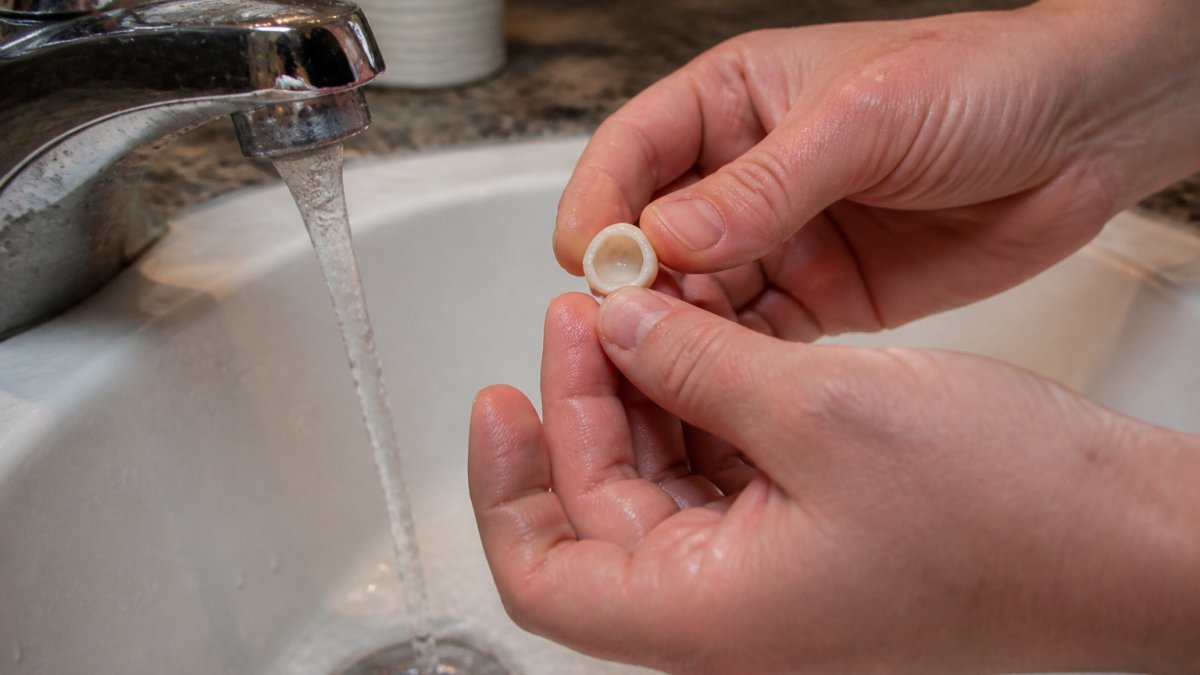
Wash your hands thoroughly. Rinse the crown under warm running water, removing debris or old cement with your finger, no tools. Pat dry; moisture interferes with cement.
Rinse the exposed tooth gently
Rinse with warm salt water (one-half teaspoon salt in eight ounces of warm water) for 30 seconds to remove debris and bacteria. Avoid hot water, which increases sensitivity. Pat dry; don't touch the tooth.
Temporary dental cement and reattachment
Two options: temporary dental cement from a pharmacy, or toothpaste as a backup adhesive.
Temporary dental cement (e.g., Dentemp) is best, follow package instructions: apply inside the crown, press firmly onto the tooth, hold 30 seconds. Toothpaste as backup: apply a small amount inside the crown, press, and hold 30 seconds, less reliable but better than nothing.
Managing Pain When Your Temporary Crown Fell Out and Tooth Hurts
A prepared tooth under a temporary crown is sensitive; without it, sensitivity increases dramatically. Manage pain while you wait for your dentist.
Over-the-counter pain relief options
Ibuprofen (400-600 mg every 6-8 hours as needed) is best, it reduces inflammation and pain together. Acetaminophen masks pain but doesn't reduce swelling; follow package dosing. Avoid aspirin, which can increase bleeding. Take with food; don't exceed the daily dose.
Sensitivity management while waiting for your dentist
Without the crown's protection, hot, cold, and pressure trigger pain. Stick to room-temperature drinks and soft foods on the other side. Sensitivity toothpaste helps but takes a few days. Rinse with warm salt water three times daily.
Calling Your Dentist and Arranging an Appointment
Call your dentist today, even if the crown is reattached.
At EPO Dental Specialists, we understand that temporary crown issues need fast attention.
Bring the crown with you to the appointment if you have it. Even if it's damaged, your dentist can use it as a reference for the replacement.
How Long Can You Go Without a Temporary Crown
There's no single safe number of days, but the principle is clear: the prepared tooth should not stay uncovered longer than necessary. A temporary crown protects it from bacteria, temperature changes, and chewing forces while the permanent crown is made. The longer it's off, the greater the risk of sensitivity, shifting, or gum irritation.
Why the prepared tooth is vulnerable
Crown preparation reduces outer tooth structure, exposing dentin and possibly the inner tooth. Without a crown:
- Sensitivity increases as hot, cold, and pressure reach the tooth directly.
- Bacteria have easier access to the prepared surface and gum margin.
- The tooth or opposing tooth can shift, affecting permanent crown fit.
A few days without a temporary crown is usually manageable with careful home care, but not weeks. If your appointment is more than a few days away, ask whether a new temporary can be placed sooner.
A practical timeline for follow-up
A general guide, not a substitute for your dentist's instructions:
- Same day: Call your dentist, even if you reseat the crown. Report whether it's intact, cracked, or lost.
- Within 24 hours: If you can't reseat it or it keeps falling out, be seen or get a phone consultation within a day.
- Within a few days: If reseated and comfortable, schedule a visit within your dentist's timeframe, often a few days to a week.
If your appointment is delayed
If your dentist is unavailable or your permanent crown hasn't arrived, ask:
- Can a new temporary crown be made and seated now?
- Is there a temporary cement I should use in the meantime?
- What symptoms should make me call back sooner?
If you can't get clear answers and the tooth is uncomfortable or the crown won't stay in place, seek a second opinion.
Eating, drinking, and oral hygiene while waiting
Protect the exposed side:
- Eat soft foods: yogurt, applesauce, mashed potatoes, scrambled eggs, soup, soft bread, cooked vegetables.
- Avoid hard, sticky, or chewy foods: nuts, hard candy, ice, raw carrots, bagels, sticky sweets.
- Chew on the other side whenever possible.
| Situation | What to Eat | What to Avoid |
|---|---|---|
| No crown, waiting for appointment | Yogurt, soup, eggs, soft bread, mashed foods | Hard foods, sticky foods, chewing on that side |
| Temporary reattachment in place | Soft foods still recommended | Hard foods, sticky foods, chewing on that side for at least 2 hours after reattachment |
| Severe sensitivity | Room-temperature soft foods | Ice cream, hot beverages, anything that triggers pain |
Special situations
- Front teeth: More visible and can affect speech. Avoid biting with front teeth and call promptly; front crowns are often easier to replace quickly.
- Children: Call the dentist the same day. Children may swallow a loose crown, so keep it out of reach and check the mouth carefully.
- Travel: Call your dentist for advice and consider a local urgent dental clinic if the crown can't be reseated or you have pain or swelling. Carry the crown in a clean container.
Using a Temporary Crown Repair Kit for Emergency Situations
Temporary crown repair kits work in a pinch when you can't reach a dentist immediately.
What a temporary crown repair kit contains
These kits typically include temporary cement, a small applicator, and sometimes a temporary crown shell. Brands like Dentemp make them specifically for this situation. The cement is the key component, it holds a crown temporarily without damaging the tooth or crown. Some kits include instructions for shaping or adjusting a temporary crown; follow these carefully, since improper adjustments can create problems.
When to use a kit versus calling your dentist
Use a kit only if you can't reach your dentist within 24 hours, it's a bridge, not a replacement for professional care. If the crown is intact and reattached, regular pharmacy temporary cement suffices. If it's cracked, broken, or lost, a kit won't help much; call your dentist.
What Not to Do When Your Temporary Crown Falls Out
Avoid these common errors:
- Don't panic, a fallen temporary crown is inconvenient, not a surgical emergency in most cases.
- Don't glue the crown with household adhesive or super glue; these can bond it permanently, making removal extremely difficult.
- Don't ignore it and hope it reattaches, it won't, and bacteria can enter the gap while your tooth shifts.
When to Seek Emergency Dental Care
Most temporary crown situations are inconvenient, not emergencies, but a missing crown can occasionally mask infection, a fractured root, or a shifted tooth. Triage symptoms into three buckets rather than treating every fallen crown the same way.
Bucket 1: Handle it at home and call your dentist during normal hours
Common and rarely urgent on their own:
- The crown came off cleanly and the tooth looks intact.
- Mild sensitivity to cold or pressure that responds to over-the-counter pain relievers.
- No swelling, no fever, and no bleeding beyond a small amount that stops with gentle pressure.
Call your dentist the same day to schedule a visit; no after-hours care needed.
Bucket 2: Call your dentist promptly, same day or within 24 hours
Needs professional attention soon, even if it doesn't feel like an emergency:
- The crown is cracked, chipped, or won't reseat because the fit has changed.
- The exposed tooth is sharp, has a visible fracture line, or feels loose.
- Moderate pain only partly controlled by over-the-counter medication.
Bucket 3: Seek urgent dental or medical care now
Go to an emergency dental office, urgent care, or emergency room, whichever can see you fastest, if any of the following are true:
- Severe, throbbing pain that does not improve with over-the-counter pain relievers, or pain that wakes you from sleep.
- Facial or gum swelling, especially swelling that is spreading toward your eye, jaw, or neck, or that is accompanied by a feeling of pressure.
- Fever (a measured temperature at or above 100.4°F) along with tooth pain or swelling. Fever plus swelling can signal an infection that needs antibiotics and possibly drainage.
What to tell the office when you call
Have these ready so the scheduler can triage you:
- Which tooth (front, back, upper, lower).
- Whether the crown is intact, cracked, or lost.
- Pain level on a 0-10 scale and whether it responds to medication.
A short, specific description often determines whether you get a same-day slot or a next-week appointment.
If you cannot reach your dentist
If your dentist's office is closed and you're in Bucket 2 or 3, look for an urgent dental care clinic or dental school clinic with emergency hours. For Bucket 3 symptoms, swelling with fever, trouble breathing or swallowing, or uncontrolled bleeding, go to an emergency room rather than waiting; ERs can manage infection and trauma even without definitive dental treatment.
If the crown is lost, cracked, or cannot be reseated
These scenarios need different handling.
If the crown is lost: Don't spend hours searching in a way that delays care.
If the crown is cracked or broken: Don't reattach fragments, small pieces can be swallowed or aspirated, and a cracked crown won't seal the tooth.
If the crown won't reseat: Stop after one or two gentle attempts. Forcing it can damage the tooth or crown.
Frequently Asked Questions
Is it common for a temporary crown to fall out?
Yes, temporary crowns fall out more often than permanent ones because they use temporary dental cement designed to hold only until your permanent crown is ready. Temporary cement is intentionally weaker so your dentist can remove it without damaging the prepared tooth. Factors like sticky foods, chewing on the wrong side, or normal wear can loosen it. If your temporary crown falls out, contact your dentist promptly to have it reattached or replaced.
Can I put a temporary crown back on myself?
You can attempt temporary reattachment using over-the-counter temporary dental cement if the crown is intact and fits properly. Clean your hands, rinse the crown and exposed tooth with water, dry gently, and apply a small amount of temporary cement to the inside of the crown before pressing it back on. However, this is only a short-term fix. Call your dentist the same day to have it professionally secured or replaced. Do not use super glue, household adhesives, or toothpaste.
How long can you go without a temporary crown?
You should not go without a temporary crown for more than a few hours. The prepared tooth underneath is extremely sensitive and vulnerable to damage, decay, and infection. Without protection, the exposed dentin can become painful and bacteria can enter the tooth. Additionally, the prepared tooth can shift or become damaged, which complicates your final crown restoration. Contact your dentist immediately if your temporary crown falls out so it can be reattached or replaced the same day.
What should I do if I swallow my temporary crown?
Do not panic. Temporary crowns are small and typically pass through your digestive system without harm. Contact your dentist right away to report what happened. Your dentist will need to create a replacement temporary crown to protect your prepared tooth while you wait for your permanent crown. In the meantime, avoid chewing on that side of your mouth and stick to soft foods. Your dentist will examine your tooth at your next appointment to ensure it has not been damaged.
A temporary crown fell out, but you now know exactly what to do. Call your dentist today to schedule an appointment. If you're in the Richardson area and need emergency dental care, EPO Dental Specialists is here to help. Our team of specialists can address complications and ensure your tooth is protected while you move forward with your permanent restoration. Request an appointment with us and get relief from temporary crown issues.