 ultimate-guide
Gum Surgery and Heart Health: What the Evidence Shows
Last Updated: November 4, 2026
Quick Summary
Gum surgery controls periodontal infection and reduces local inflammation, but no large trial has proven it prevents heart attacks. People with periodontitis are up to twice as likely to develop coronary artery disease, so treating the infection is risk management rather than a guaranteed heart benefit.
- People with gum disease are 28% more likely to suffer a heart attack than those without dental problems.
- Periodontal bacteria can enter the bloodstream and trigger systemic inflammation linked to coronary artery disease.
- The American Heart Association confirms an association with heart attack, stroke, atrial fibrillation, and heart failure, not causation.
- Patients with prosthetic valves or prior infective endocarditis need antibiotic prophylaxis before gum procedures.
- Brush twice daily, floss daily, and keep professional cleaning appointments to prevent periodontitis.
Table of Contents
- The Gum Disease and Heart Disease Connection
- How Oral Bacteria and Cardiovascular Risk Are Linked
- What Gum Surgery Actually Does for Long-Term Heart Health
- Periodontal Treatment and Heart Health: The Inflammation Factor
- Who Needs Extra Caution: Heart Valve Conditions and Antibiotic Prophylaxis
- Oral Microbiome Testing and Post-Surgical Dental Protocols
- Preventive Dental Care That Protects Your Heart
- Booking a Periodontal Evaluation at EPO Dental Specialists
- Frequently Asked Questions
The Gum Disease and Heart Disease Connection
People with gum disease are 28% more likely to suffer a heart attack than those without dental problems, according to the CareQuest Institute for Oral Health's 2026 report on oral health and heart disease. That number sits against a sobering backdrop: heart disease remains the leading cause of death in the United States, per the American Heart Association's 2026 Heart Disease and Stroke Statistics.
At EPO Dental Specialists, we field questions about this link constantly, and most of them boil down to one: if I treat my gums, does my heart benefit? Below, we break down what the evidence actually shows about gum surgery and long-term heart health, where the science is solid, and where it is still catching up.
The gum disease and heart disease connection is real and measurable. It is also more complicated than headlines suggest. Read our full overview of how gum disease affects heart health before you assume treatment alone solves the problem.
How Oral Bacteria and Cardiovascular Risk Are Linked
The oral bacteria and cardiovascular risk relationship starts with a simple mechanical problem: infected gums bleed. Every time you brush, floss, or chew, bacteria from periodontal pockets can slip into the bloodstream, a process called bacteremia.
Once in circulation, those pathogens carry inflammatory molecules that trigger a systemic immune response. The body ramps up inflammation markers like C-reactive protein, and chronic low-grade inflammation is a known driver of coronary artery disease. Researchers have also found periodontal bacteria inside atherosclerotic plaques themselves, suggesting bacterial translocation plays a direct role in calcium buildup and arterial narrowing.
The Journal of the American Heart Association's 2026 research adds a genetic dimension: gene variants tied to periodontal disease overlap with those linked to coronary heart disease. Our article on oral inflammation and arterial plaque goes deeper into that mechanism.
What Gum Surgery Actually Does for Long-Term Heart Health
Here is the honest answer: gum surgery controls periodontal infection and reduces local inflammation, but no large trial has proven it prevents heart attacks. That gap between association and causation is where most articles oversell the evidence.
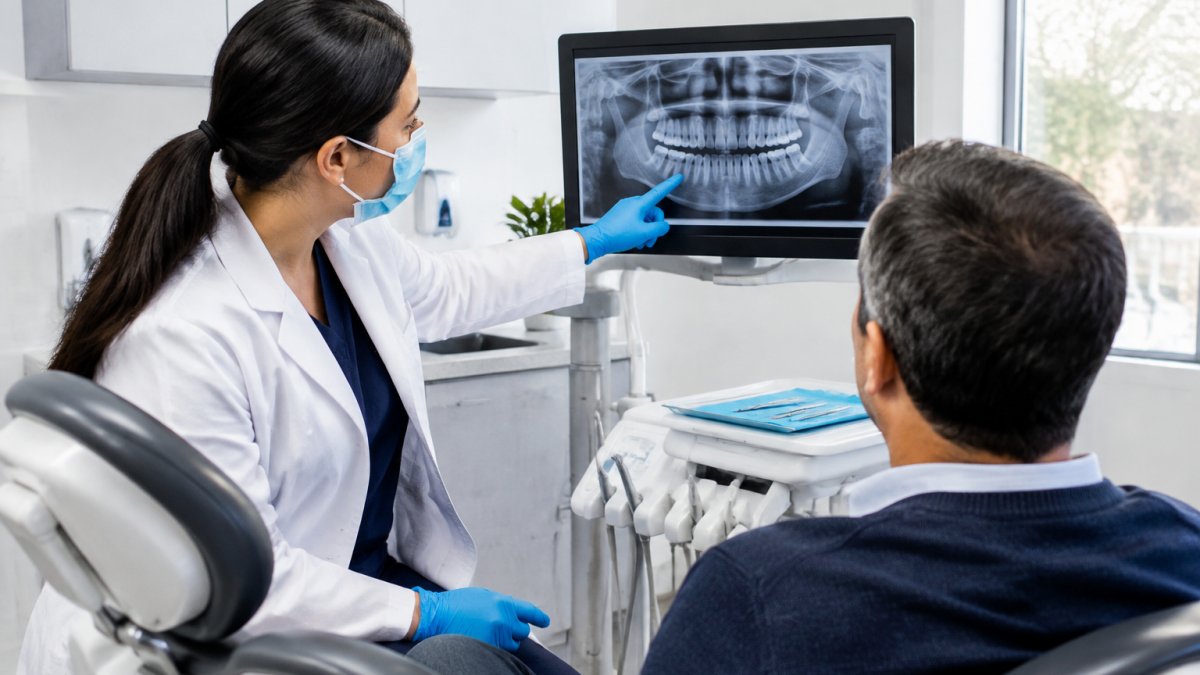
What surgery does reliably is eliminate diseased tissue, close periodontal pockets, and stop the chronic infection that feeds systemic inflammation. Gum surgery: what to expect covers the types of procedures, recovery, and more. Patients with periodontitis are up to twice as likely to develop coronary artery disease compared to those with healthy gums, per ScienceAlert's 2024 summary of oral hygiene and heart health research, so interrupting that chronic infection is not cosmetic dentistry. It is risk management.
What the Research Does and Does Not Prove
The American Heart Association (2026) confirms periodontal disease is associated with higher rates of heart attack, stroke, atrial fibrillation, and heart failure. Association is not causation, though. The NIH clinical trial registry lists ongoing research into whether treating periodontal disease actually improves endothelial function and lowers systemic inflammation. Until those results land, treat gum surgery as heart-protective in principle, not guaranteed in outcome.
Here is what the evidence does and does not establish about gum surgery and heart outcomes.
| Claim | What the article states |
|---|---|
| Heart attack risk with gum disease | 28% more likely than those without dental problems |
| Coronary artery disease risk with periodontitis | Up to twice as likely versus healthy gums |
| Proven benefit of gum surgery | No large trial has proven it prevents heart attacks |
| What surgery reliably does | Eliminates diseased tissue, closes pockets, stops chronic infection |
| AHA 2026 position | Periodontal disease associated with heart attack, stroke, AFib, heart failure |
| Evidence status | Association is not causation; intervention trials ongoing |
| Premiere Heart Health Center 2024 | Evidence surgery directly prevents heart attacks is thin |
Periodontal Treatment and Heart Health: The Inflammation Factor
The periodontal treatment and heart health story is really an inflammation story. Gum disease keeps your immune system in a permanently activated state. Remove the source, and inflammation markers tend to fall.
That said, critics of the strong version of this claim have a point. The Premiere Heart Health Center (2024) notes that evidence gum surgery directly prevents heart attacks is thin, resting on small randomized trials. The Journal of the American Heart Association (2026) calls for more stringently controlled intervention studies before drawing long-term conclusions about atherosclerotic cardiovascular disease progression.
Who Needs Extra Caution: Heart Valve Conditions and Antibiotic Prophylaxis
Patients with prosthetic valves, prior infective endocarditis, or certain congenital heart conditions need antibiotic prophylaxis before dental work that manipulates gum tissue. This is not optional caution; it is standard protocol for preventing heart valve infection.
Infective endocarditis is an infection of the endocardial surface, and oral procedures can seed it in susceptible patients. If you have a valve replacement, a history of endocarditis, or a qualifying cardiac condition, tell your periodontist before scheduling anything. Review pre-operative instructions for surgical patients so you arrive prepared.
If you are unsure whether prophylaxis applies to you, bring your most recent cardiology note to your periodontal consultation and confirm your status with your cardiologist.
Oral Microbiome Testing and Post-Surgical Dental Protocols
After gum surgery, patients with heart conditions should discuss their healing plan with both their dentist and cardiologist, including what to do if bleeding persists or fever develops.
Preventive Dental Care That Protects Your Heart
The least glamorous intervention is also the most reliable. Preventive dentistry keeps gingivitis from becoming periodontitis, and periodontitis from becoming a chronic systemic problem.
- Brush twice daily with a soft-bristled brush and fluoride toothpaste
- Floss or use interdental brushes daily; bleeding gums are a warning, not a normal state
- Keep professional dental cleaning appointments at the interval your dentist sets
- Manage blood pressure, blood sugar, and smoking, all of which amplify periodontal risk
- Report gum symptoms early: redness, swelling, recession, persistent bad breath, or loose teeth
Symptoms of gum disease rarely announce themselves loudly. By the time teeth feel loose, bone loss is already advanced.
Booking a Periodontal Evaluation at EPO Dental Specialists
If you have gum disease and any cardiac risk factors, the practical next step is a periodontal evaluation, not a wait-and-see approach. Our board-certified periodontist, Dr. Yaritza Vazquez, evaluates periodontal health and builds a personalized treatment plan.
As a multi-specialty practice, we handle periodontics, endodontics, and orthodontics under one roof, and we coordinate directly with your personal dentist and cardiologist. Explore our periodontal care and gum therapy treatments to see what an evaluation involves.
Frequently Asked Questions
Can gum disease increase the risk of heart disease?
Yes, research shows a consistent association. Research shows an association between gum disease and heart disease. The link appears to run through chronic inflammation and bacteria entering the bloodstream, though researchers are still working out how much treating gum disease directly lowers cardiovascular risk.
Is there clinical evidence that gum surgery improves heart health outcomes?
The evidence is promising but not yet definitive. Research has linked periodontal disease with cardiovascular risk, and studies are ongoing into whether periodontal treatment improves heart outcomes, so the evidence should become clearer over time.
What is the number one cause of infective endocarditis?
Infective endocarditis develops when bacteria enter the bloodstream and settle on the heart's inner lining or a heart valve. Anyone with a heart valve condition should ask their cardiologist whether antibiotic prophylaxis is recommended before dental work.
How do I know if my tooth infection has spread to my heart?
Fever, chills, or unusual fatigue alongside a tooth or gum infection warrant prompt medical attention. Anyone with a heart valve condition or a weakened immune system should contact both a physician and a dentist right away.
The evidence linking gum disease to heart disease is strong enough to act on, even while researchers work out the precise mechanism. If your gums bleed when you brush or you have been told you need periodontal treatment, do not wait for symptoms to worsen. Get started with EPO Dental Specialists and schedule a periodontal evaluation with our board-certified specialist, using cone beam imaging and a personalized treatment plan built around your heart health.