 ultimate-guide
Antibiotics for Periodontal Disease: Your Complete Guide
Last Updated: November 9, 2026
Quick Summary
Antibiotics for periodontal disease are an adjunctive therapy, not a cure, because bacteria in subgingival biofilm resist drugs until the biofilm is mechanically disrupted. They should only be prescribed after scaling and root planing, and they never replace mechanical debridement or ongoing periodontal maintenance.
- Bacteria in subgingival biofilm are resistant to antibiotics, so drugs are prescribed only after mechanical disruption.
- The standard amoxicillin-metronidazole regimen is 500 mg amoxicillin and 400 mg metronidazole three times daily for 7 days.
- Standard adjunctive doxycycline is 7 days, while sub-antimicrobial doxycycline at 20 mg twice daily runs 3 to 9 months.
- Metronidazole causes a disulfiram-like reaction with alcohol, so avoid alcohol for at least 72 hours after the last dose.
- Request a periodontal evaluation if your gums bleed, your breath is persistently bad, or pockets measure 4 mm or deeper.
Table of Contents
- Why Antibiotics Alone Cannot Cure Gum Disease
- How Systemic Antibiotics for Periodontal Disease Work
- Local Antibiotics for Periodontal Disease: Direct Delivery Into Pockets
- Commonly Prescribed Antibiotics and What They Target
- How Long to Take Doxycycline for Periodontitis
- Periodontitis Treatment Without Antibiotics: What Works
- Risks, Side Effects, and Who Should Avoid These Drugs
- When to Request a Periodontal Evaluation
- Frequently Asked Questions
Why Antibiotics Alone Cannot Cure Gum Disease
Antibiotics for periodontal disease are a genuine clinical tool, but they are not a cure, and treating them as one is where patients and clinicians alike run into trouble.
The reason is mechanical, not pharmacological. The bacteria driving periodontitis live inside a subgingival biofilm, a dense, sticky community that clings to tooth roots below the gumline.
The drug is the cleanup crew, not the demolition team. Something has to break up the biofilm first.
The Biofilm Barrier That Blocks Drug Action
A biofilm is not loose plaque you can rinse away. It is an organized microbial community with its own protective matrix, and it changes how bacteria behave.
This is why a prescription alone, without scaling and root planing, tends to disappoint. If you want to understand the full treatment sequence, our guide on how to treat gum disease walks through it step by step.
How Systemic Antibiotics for Periodontal Disease Work
Systemic antibiotics for periodontal disease are oral drugs that circulate through the bloodstream and reach the periodontal tissues from the inside.
The mechanism matters. A systemic drug reaches the gingival tissues and the crevicular fluid, where it can suppress pathogenic bacteria that have already been disrupted mechanically.
Timing may matter more than most patients realize. A 2026 clinical trial reported by Harvard School of Dental Medicine found that giving antibiotics before periodontal treatment may better stabilize beneficial bacteria compared with traditional post-treatment administration.
What systemic antibiotics reliably do:
- Reduce bacterial load in periodontal pockets after debridement
- Improve clinical outcomes when combined with scaling and root planing
- Help in specific cases such as aggressive or refractory periodontitis
What they do not do: replace mechanical disruption, or prevent recurrence without ongoing periodontal maintenance.
Local Antibiotics for Periodontal Disease: Direct Delivery Into Pockets
Local antibiotics for periodontal disease are placed directly into periodontal pockets as gels, fibers, microspheres, or chips.
Minocycline microspheres and doxycycline gel are the familiar examples. A clinician delivers the material into a debrided pocket, where it releases over days to weeks.
The trade-off is reach. Local delivery treats the sites where it is placed, not the whole mouth, so it suits isolated deep pockets rather than generalized disease.
Commonly Prescribed Antibiotics and What They Target
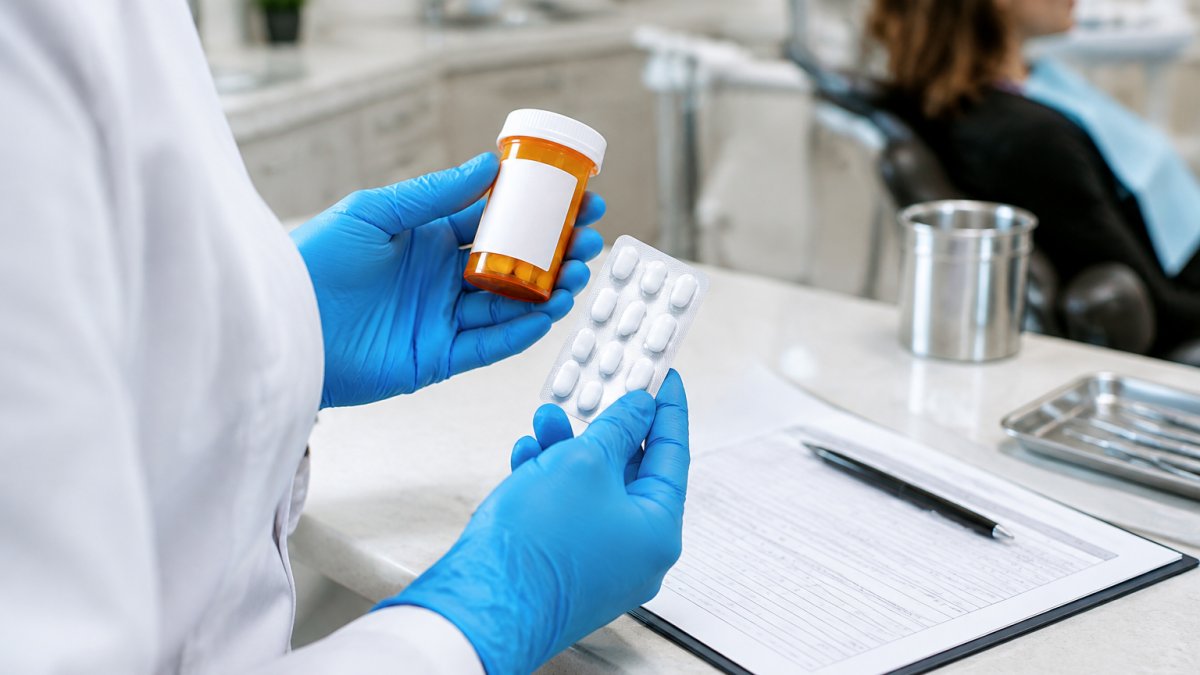
The antibiotics prescribed for periodontal disease fall into a few well-defined categories, and each targets a different spectrum of bacteria. The combination approach is the most studied.
Amoxicillin and Metronidazole Combination
The amoxicillin-metronidazole pairing is the most researched systemic protocol for periodontitis. Amoxicillin covers a broad range of gram-positive organisms; metronidazole targets anaerobic bacteria that thrive in deep pockets. Together they cover the mixed microbial flora that drives periodontitis.
The standard regimen documented by W&H Dental Newsroom is 500 mg amoxicillin and 400 mg metronidazole taken three times per day for 7 days. A ClinicalTrials.gov registered trial evaluated exactly this protocol combined with full-mouth ultrasonic debridement in patients with generalized periodontitis.
Tetracyclines: Doxycycline and Minocycline
Tetracyclines do more than kill bacteria. Doxycycline also inhibits matrix metalloproteinases, enzymes that break down gum tissue, which is why a low-dose doxycycline regimen is sometimes used for its anti-inflammatory effect rather than its antibacterial one.
Minocycline appears most often as a local delivery agent.
Other agents in the mix include azithromycin, clindamycin, and metronidazole alone.
How Long to Take Doxycycline for Periodontitis
Doxycycline is used two different ways in periodontitis, and the duration depends entirely on which one your clinician is prescribing.
Standard adjunctive course: 7 days
When doxycycline is used as an adjunct to scaling and root planing to reduce bacterial load, the typical course is 7 days, matching the 7-day regimen used across most periodontal antibiotic protocols. The dose is usually 100 mg twice daily on the first day, then 100 mg once daily for the remainder, though the prescriber sets the exact schedule. The goal is to suppress pathogenic bacteria in the pockets after the biofilm has been mechanically disrupted, not to sterilize the mouth.
Sub-antimicrobial dose doxycycline: 3 to 9 months
A second use is low-dose doxycycline, often 20 mg twice daily, below the level that kills bacteria. At that dose the drug inhibits matrix metalloproteinases, the enzymes that break down collagen in gum tissue, so it is prescribed for its anti-inflammatory effect rather than its antibacterial one. This regimen is typically continued for 3 to 9 months and is sometimes used alongside scaling and root planing in patients with moderate to severe disease.
Why duration is not a detail to improvise
Stopping a standard course early leaves surviving bacteria and encourages recurrence. Extending a course without cause feeds bacterial resistance and adds side-effect exposure for little gain. The right length depends on the drug, the severity and pattern of disease, whether local delivery is also being used, and your medical history. A patient on warfarin, for example, may need a different antibiotic entirely rather than a longer course of the same one.
What to do if you miss a dose
Take it when you remember, unless it is almost time for the next dose, in which case skip the missed one. Do not double up. Finish the prescribed course even if your gums feel better in three days, because symptom relief arrives before the bacterial load is fully suppressed.
Watch out: do not stop a 7-day course early because bleeding has settled, and do not stretch a low-dose regimen beyond what was prescribed without checking in, since the two regimens are dosed and monitored differently. If you are weighing treatment options, our guide on how to treat gum disease walks through the full sequence.
Doxycycline is prescribed two different ways for periodontitis, and the dose and duration depend on which one your clinician chooses.
| Regimen | Dose | Duration | Purpose |
|---|---|---|---|
| Standard adjunctive course | 100 mg twice daily day one, then 100 mg once daily | 7 days | Suppress pathogenic bacteria after biofilm disruption |
| Sub-antimicrobial dose | 20 mg twice daily | 3 to 9 months | Inhibit matrix metalloproteinases for anti-inflammatory effect |
Periodontitis Treatment Without Antibiotics: What Works
Periodontitis treatment without antibiotics starts with mechanical disruption, and for many patients that is enough. Scaling and root planing removes subgingival biofilm and calculus from root surfaces, and it remains the foundation of every periodontal treatment protocol.
What works without drugs:
- Scaling and root planing to disrupt biofilm and smooth root surfaces
- Oral hygiene instruction tailored to your pocket depths and anatomy
- Periodontal maintenance at intervals set by your periodontist
- Risk factor control, including blood sugar management and smoking cessation
- Local delivery in selected sites, when a systemic course is not appropriate
Our team at EPO Dental Specialists provides gum disease treatment built around this mechanical foundation, with a board-certified periodontist assessing whether adjunctive drugs add anything for your case.
Risks, Side Effects, and Who Should Avoid These Drugs
Most periodontal antibiotic content stops at "you might get an upset stomach." The more useful question is which patients should not take these drugs at all, and which everyday medications turn a routine course into a problem. That is where the real risk sits.
Common side effects
Gastrointestinal upset, nausea, diarrhea, and taste changes are the most frequent complaints with oral amoxicillin, metronidazole, and tetracyclines. Taking the dose with food (except where the label says otherwise) and finishing the full course reduces the chance of a rebound infection. Metronidazole is the outlier: it causes a disulfiram-like reaction with alcohol, so no wine, beer, or alcohol-containing mouthwash during the course and for at least 72 hours after the last dose.
Drug interactions that change the plan
- Oral contraceptives: broad-spectrum antibiotics like amoxicillin can reduce estrogen absorption, and most prescribers advise a backup method during the course. This is a common patient question and rarely answered in periodontal handouts.
- Warfarin and other anticoagulants: metronidazole inhibits the enzymes that clear warfarin, which can raise INR and bleeding risk. A prescriber will often adjust the warfarin dose or choose a different antibiotic.
- Alcohol-containing products: as above, metronidazole plus alcohol is a hard no, including some cough syrups and mouth rinses.
- Lithium and methotrexate: tetracyclines can raise levels of both, so dose monitoring is needed.
- Antacids, sucralfate, and iron: they chelate tetracyclines and cut absorption; separate doses by at least two hours.
Who should avoid these drugs
- Pregnancy and breastfeeding: tetracyclines are avoided because of fetal tooth staining and effects on bone; metronidazole is generally avoided in the first trimester. Amoxicillin is often the safer choice when an antibiotic is truly needed, but the decision belongs to the prescriber and the patient's obstetric clinician.
- Children under 8: tetracyclines can permanently stain developing teeth.
- Allergy history: a documented penicillin allergy rules out amoxicillin and calls for an alternative such as azithromycin or clindamycin, each with its own trade-offs.
- Kidney or liver impairment: metronidazole and tetracyclines may need dose adjustment.
- Myasthenia gravis: certain antibiotics can worsen muscle weakness; flag it before any prescription.
The resistance problem
The larger concern is bacterial resistance. Antibiotic stewardship matters here: these drugs should be reserved for patients who genuinely need them, and they should never be used as a substitute for mechanical debridement.
Watch out: taking a leftover antibiotic course without mechanical treatment does nothing for the biofilm and adds resistance pressure for no benefit. If cost is part of your decision, our breakdown of gum disease treatment cost without insurance covers what to expect.
When to Request a Periodontal Evaluation
Request a periodontal evaluation if you have gums that bleed when brushing, persistent bad breath, receding gums, loose teeth, or pockets your dentist has measured at 4 mm or deeper.
A board-certified periodontist measures pocket depth, checks attachment loss, and reviews radiographs to stage the disease.
If you are unsure whether your symptoms warrant a visit, our guide to the signs of advanced gum disease and our overview of the causes of persistent gum bleeding can help you decide.
Gum disease rarely announces itself, and the damage it does between checkups is cumulative.
Frequently Asked Questions
What are the common antibiotics used to treat periodontal disease?
The most frequently prescribed are amoxicillin, metronidazole, doxycycline, minocycline, tetracycline, azithromycin, and clindamycin. Amoxicillin combined with metronidazole is a commonly studied pairing; your prescriber will set the exact dose and duration. Doxycycline and minocycline also come in local gel or chip forms placed directly into pockets. Which one fits you depends on your infection, allergies, and history, so a periodontist should make the call.
Are antibiotics always needed for gum disease?
No. Scaling and root planing remains the primary treatment, and many patients improve with mechanical debridement and better oral hygiene alone. Antibiotics for periodontal disease are adjunctive, reserved for cases such as aggressive or refractory periodontitis, deep pockets that persist after cleaning, or patients with certain systemic conditions. The University at Buffalo School of Dental Medicine notes that bacteria in subgingival biofilm resist antibiotics, so drugs only help after the biofilm is physically disrupted.
Can you get antibiotics for gum disease over the counter?
No. Every antibiotic used for periodontal disease requires a prescription in the United States. Taking leftover or borrowed antibiotics is risky because the wrong drug or dose encourages bacterial resistance and may not address your specific infection. A clinician needs to examine pocket depth, take radiographs, and review your allergies and medical history first. If you suspect gum infection, book an evaluation rather than seeking pills online.
Can periodontal disease be treated without antibiotics?
Yes. Periodontitis treatment without antibiotics centers on scaling and root planing, which removes the subgingival biofilm and calculus that drive inflammation. Patients also benefit from daily cleaning and periodontal maintenance visits set by their periodontist. Some deep pockets may still need surgery, but many cases stabilize without any systemic drug.