 comparison
Gum Disease Treatment Cost Without Insurance
Table of Contents
- What Gum Disease Treatment Costs Without Insurance
- Scaling and Root Planing: The Foundation of Nonsurgical Care
- Deep Cleaning Teeth Cost Without Insurance by Severity
- Cost of Laser Gum Disease Treatment
- Periodontal Maintenance Cost and Follow-Up Care
- Gum Disease Treatment Payment Plans and Affordability
- Questions to Ask Before Accepting a Treatment Estimate
- Frequently Asked Questions
Last Updated: October 17, 2026
What Gum Disease Treatment Costs Without Insurance
Gum disease treatment cost without insurance ranges widely by disease severity, treatment type, and whether you need nonsurgical or surgical care.
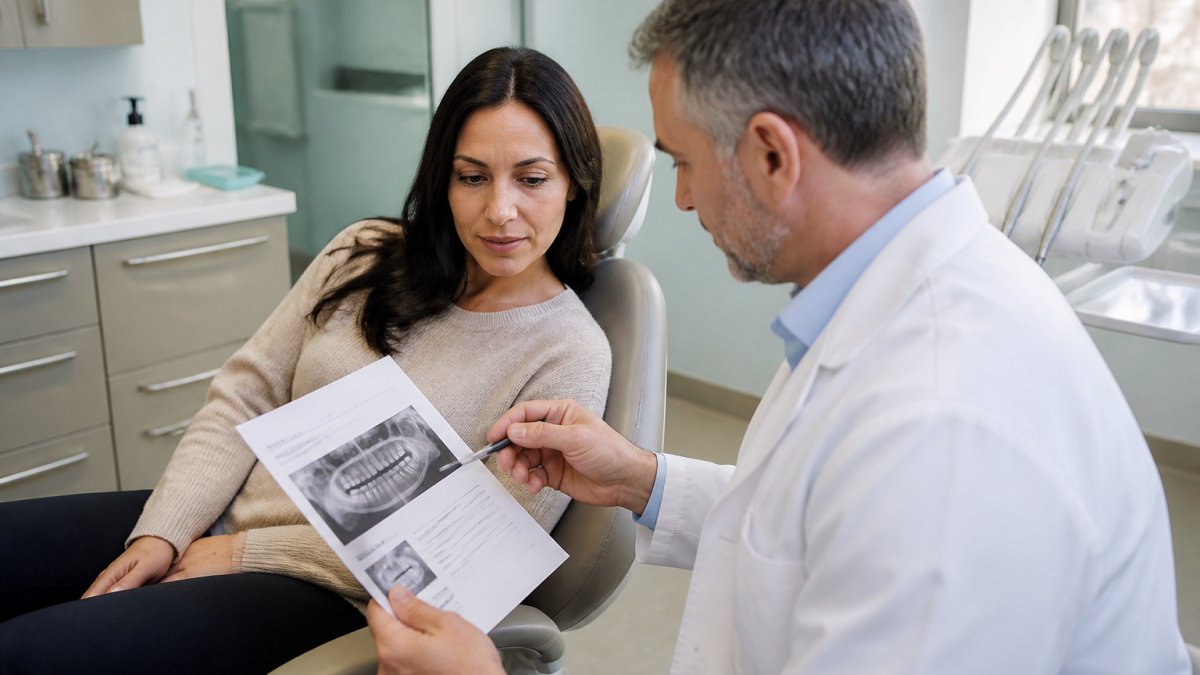
Early-stage disease responds to less invasive, cheaper treatments, while advanced disease requiring surgical grafts or implant preparation costs significantly more. Your bill also reflects location, the specialist's experience, and whether you're referred to a periodontist.
At EPO Dental Specialists, our Board-Certified periodontist reviews each case individually, because gum disease treatment cost varies dramatically based on how many teeth need care and how deep the infection has progressed.
Scaling and Root Planing: The Foundation of Nonsurgical Care
Scaling and root planing is the first-line nonsurgical treatment for gum disease. This deep cleaning removes plaque and tartar below the gum line and smooths the root surface to help gums reattach, halting progression for many patients with early to moderate disease.
The procedure is often quoted per quadrant.
Pocket depth, buildup, and local anesthesia all factor in. Some practices charge a flat rate per quadrant; others charge per tooth or per visit. Severe cases may be split across appointments, spreading costs but extending your timeline.
EPO Dental Specialists performs scaling and root planing, and our Board-Certified periodontist determines whether one or multiple visits best serve your healing.
Deep Cleaning Teeth Cost Without Insurance by Severity
Deep cleaning teeth cost without insurance depends heavily on disease stage, but the more useful way to read any quote is by treatment extent: one quadrant, multiple quadrants, or full mouth.
| Treatment extent | Low estimate | Typical estimate | High estimate | What the range generally includes |
|---|---|---|---|---|
| One quadrant (scaling and root planing) | $210 | $289 | $435 | Periodontal evaluation, local anesthesia, one quadrant of scaling and root planing, basic post-op instructions |
| Two quadrants | $420 | $580 | $870 | Same as above for two quadrants, often completed in one or two visits |
| Full mouth (four quadrants) | $840 | $1,160 | $1,740 | Four-quadrant scaling and root planing, often split across two visits; may or may not include re-evaluation |
| Full mouth with adjuncts (antimicrobial rinse, host-modulation medication, or localized antibiotic) | $1,200 | $1,800 | $3,000 | Full-mouth scaling and root planing plus prescribed adjuncts and a re-evaluation visit |
These ranges reflect published treatment guides and practice fee patterns, not quotes.
Early-stage gum disease presents with mild inflammation, light bleeding, and shallow pockets (generally under 4mm).
Moderate gum disease shows pockets of 4-6mm, more bleeding, and possible early bone loss.
Advanced periodontal disease involves pockets over 6mm, significant bone loss, and risk of tooth loss. Treatment often moves into surgical management, including flap surgery, bone grafting, or gum grafting.
Published dental cost data shows certain advanced periodontal procedures. That structure explains why full-mouth surgical care for advanced disease can be substantial even when the initial deep cleaning looked affordable.
When comparing estimates, normalize them to the same extent. A $250 per-quadrant quote and a $1,100 full-mouth quote may describe the same treatment. Ask each practice to state the number of quadrants, visits, and whether the re-evaluation is included before comparing totals.
Cost of Laser Gum Disease Treatment
Laser-Assisted New Attachment Procedure (LANAP) is a minimally invasive alternative to traditional scaling and root planing. It uses a specialized laser to remove diseased tissue and bacteria while preserving healthy gum tissue, causing less bleeding, minimal downtime, and often faster healing.
LANAP costs more upfront, reflecting specialized equipment, additional training, and advanced technology.
LANAP may justify its expense for moderate to advanced disease when you want to minimize discomfort and recovery time. For early-stage disease, traditional scaling and root planing delivers comparable outcomes at lower cost.
Insurance coverage for laser treatment varies. Some dental plans cover LANAP at the same rate as conventional deep cleaning; others classify it as experimental and deny coverage. Without insurance, you'll pay the full laser treatment fee.
Periodontal Maintenance Cost and Follow-Up Care
Gum disease doesn't end after initial treatment. Periodontal maintenance, ongoing professional cleaning and monitoring, prevents recurrence and protects your investment.
After scaling and root planing or laser treatment, most patients need maintenance visits every 3-4 months for the first year, then every 6 months, involving professional cleaning, pocket depth measurement, and assessment for recurrence.
Periodontal maintenance costs less than your initial deep cleaning but more than standard professional cleaning.
Maintenance is critical because periodontal disease is chronic: bacteria recolonize even after successful treatment, and without regular intervention pockets deepen and bone loss resumes. Skipping visits to save money typically triggers flare-ups requiring retreatment, a false economy.
Your dentist can perform some maintenance visits, but your periodontist should oversee your care plan and periodic comprehensive evaluations, a collaborative approach EPO Dental Specialists emphasizes.
Gum Disease Treatment Payment Plans and Affordability
A treatment bill without insurance can feel overwhelming, but the estimate is rarely paid all at once. Building a sample treatment-plan bill and comparing low-cost care options and payment structures can reduce or spread that total.
A transparent sample treatment-plan bill
The bill below shows how individual charges stack into a full out-of-pocket total for a moderate-disease case treated with four-quadrant scaling and root planing plus follow-up. Amounts are illustrative typical ranges, not a quote from any specific practice.
| Line item | Low | Typical | High | Notes |
|---|---|---|---|---|
| Periodontal evaluation (comprehensive) | $75 | $150 | $300 | Often includes pocket charting and diagnosis |
| Full-mouth X-rays or periodontal imaging | $100 | $175 | $275 | Bitewings plus a panoramic or full-mouth series |
| Scaling and root planing, four quadrants | $840 | $1,160 | $1,740 | May be split across two visits |
| Local anesthesia | $0 | $50 | $150 | Sometimes bundled into the quadrant fee |
| Prescribed antimicrobial rinse or adjunct | $15 | $40 | $90 | Over-the-counter or prescription |
| Re-evaluation visit (4-6 weeks) | $0 | $75 | $150 | Checks pocket response before maintenance |
| First periodontal maintenance visit | $150 | $225 | $300 | Often scheduled 3 months after treatment |
| Sample total | $1,180 | $1,875 | $3,005 | Sum of the rows above |
Two lessons emerge. First, the deep cleaning itself is often less than half the total out-of-pocket cost once evaluation, imaging, adjuncts, re-evaluation, and the first maintenance visit are included. Second, a quote listing only the quadrant fee is incomplete, ask for an itemized estimate so you can compare totals rather than isolated prices.
Low-cost care options compared
| Option | Typical cost relative to private practice | Trade-offs |
|---|---|---|
| Dental school clinic | Roughly 40-60% lower | Treatment is slower, performed by supervised students, and scheduling follows the academic calendar |
| Federally qualified health center (FQHC) | Sliding scale based on income | Waitlists are common; periodontal specialty care may require a referral |
| Community clinic or nonprofit dental program | Reduced flat fees | Limited services; may not offer surgical periodontal care |
| Dental membership or discount plan | $80-$200 annual fee, then 10-60% off standard fees | Not insurance; you still pay the discounted fee, and participating providers vary |
| In-house payment plan | No interest if paid within 6-12 months | Often requires a 25-50% down payment |
| Third-party medical credit card | Promotional 0% for 6-24 months, then substantial interest | Interest can be retroactive if the balance is not paid in full by the deadline |
A practical sequence: request an itemized estimate from the private practice, price the same treatment at a dental school or FQHC, then decide whether a payment or membership plan closes the gap. Comparing itemized totals reveals whether a lower headline fee is actually lower after evaluation, imaging, and follow-up are counted.
A method for comparing local estimates
Provider type and local fee schedules move quotes more than patients expect. To compare fairly, collect three quotes and normalize each on five fields: quadrants treated, number of visits, whether anesthesia is bundled, whether imaging and re-evaluation are included, and whether the first maintenance visit is included. A quote that looks $300 cheaper often loses that advantage once missing items are added back.
At EPO Dental Specialists, we provide itemized estimates so patients see exactly which procedures, visits, and follow-ups are included before committing, and we review whether treatment can be phased to align with a payment plan.
Questions to Ask Before Accepting a Treatment Estimate
Before committing to gum disease treatment, ask these questions:
1. What is included in this estimate? Does it cover the periodontal evaluation, scaling and root planing, anesthesia, and follow-up visits, or are some components billed separately? A complete estimate lists every procedure and cost.
2. How many visits will treatment require? Will all four quadrants be completed in one appointment or spread over multiple visits?
**3.
4. Does this estimate include periodontal maintenance? Clarify whether maintenance visits are included or billed separately so you can budget for ongoing costs.
5. What is your success rate with this procedure? Ask about clinical outcomes: how many patients see disease resolution, and how many require retreatment?
6. Are there less expensive alternatives? If LANAP or surgical grafting is recommended, ask whether scaling and root planing alone might be appropriate first.
**7.
Gum disease treatment without insurance requires careful planning, but delaying care typically costs far more.
The real question isn't whether you can afford treatment, it's whether you can afford not to pursue it. Untreated periodontal disease leads to tooth loss (the CDC).
EPO Dental Specialists helps patients understand their periodontal condition and explore options that fit their budget and health needs.
Frequently Asked Questions
What is the average cost of gum disease treatment without insurance?
Gum disease treatment costs vary widely depending on severity and treatment type. Full-mouth treatment can cost significantly more, especially if laser therapy or surgical procedures are needed. The final cost depends on disease stage, the number of teeth affected, and your provider's location and expertise. Request a detailed estimate from your periodontist to understand your specific out-of-pocket cost.
How much does deep cleaning teeth cost without insurance?
Deep cleaning, or scaling and root planing, is the primary nonsurgical treatment for moderate gum disease. Your actual cost depends on how many quadrants need treatment, disease severity, and local pricing. Some patients require treatment on all four quadrants, while others may need it on fewer areas. Many dental offices break down the cost per quadrant in their estimates so you understand the total before committing to the full procedure.
Can I reverse gum disease without treatment, or will it get worse?
Early-stage gum disease (gingivitis) may respond to improved home care, but moderate to advanced periodontal disease requires professional treatment to stop progression. Untreated gum disease worsens over time, leading to bone loss, tooth mobility, and eventual tooth loss. Bacteria and infection deepen periodontal pockets, making the condition harder and more expensive to treat later. Delaying treatment also increases the risk of systemic health complications. A periodontal evaluation will determine whether your case requires professional cleaning or if home care alone is sufficient.
What factors affect the cost of gum disease treatment without insurance?
Treatment cost depends on disease severity, the number of teeth and quadrants involved, whether you need surgical procedures or bone grafts, your provider's experience and location, and the technology used. Geographic variation is significant; urban specialists may charge differently than suburban practices. Your treatment plan's complexity also affects cost: simple maintenance differs from treating infection or bone loss. Request an itemized estimate breaking down each component.
Are there payment plans available if I cannot afford gum disease treatment upfront?
Many dental offices offer in-house payment plans or financing through third-party lenders. Some practices bill treatment in phases so you spread costs over several visits. Dental discount plans and membership programs offer reduced fees for uninsured patients, though they are not insurance. Community health centers may provide sliding-scale fees based on income. Discuss your financial situation with your periodontist before treatment; many specialists work with patients to make necessary care accessible rather than delaying treatment due to cost concerns.